
Brinjal requires consistent soil moisture for healthy growth and continuous fruit production. Avoid allowing the soil to dry out completely, but also prevent waterlogging, as excess moisture can damage the root system and encourage soil-borne diseases.
- 💧 Water regularly during dry periods to keep the soil evenly moist.
- 🌧️ Ensure proper drainage during the rainy season to prevent root rot and bacterial diseases.
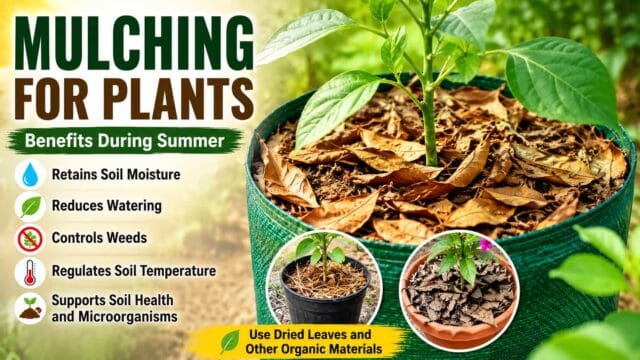
- 🍂 Apply organic mulch such as dried leaves, straw, or grass clippings around the base of the plants to conserve moisture, suppress weeds, and regulate soil temperature.
- 🌿 Loosen the soil around the plants occasionally to improve aeration and root development.
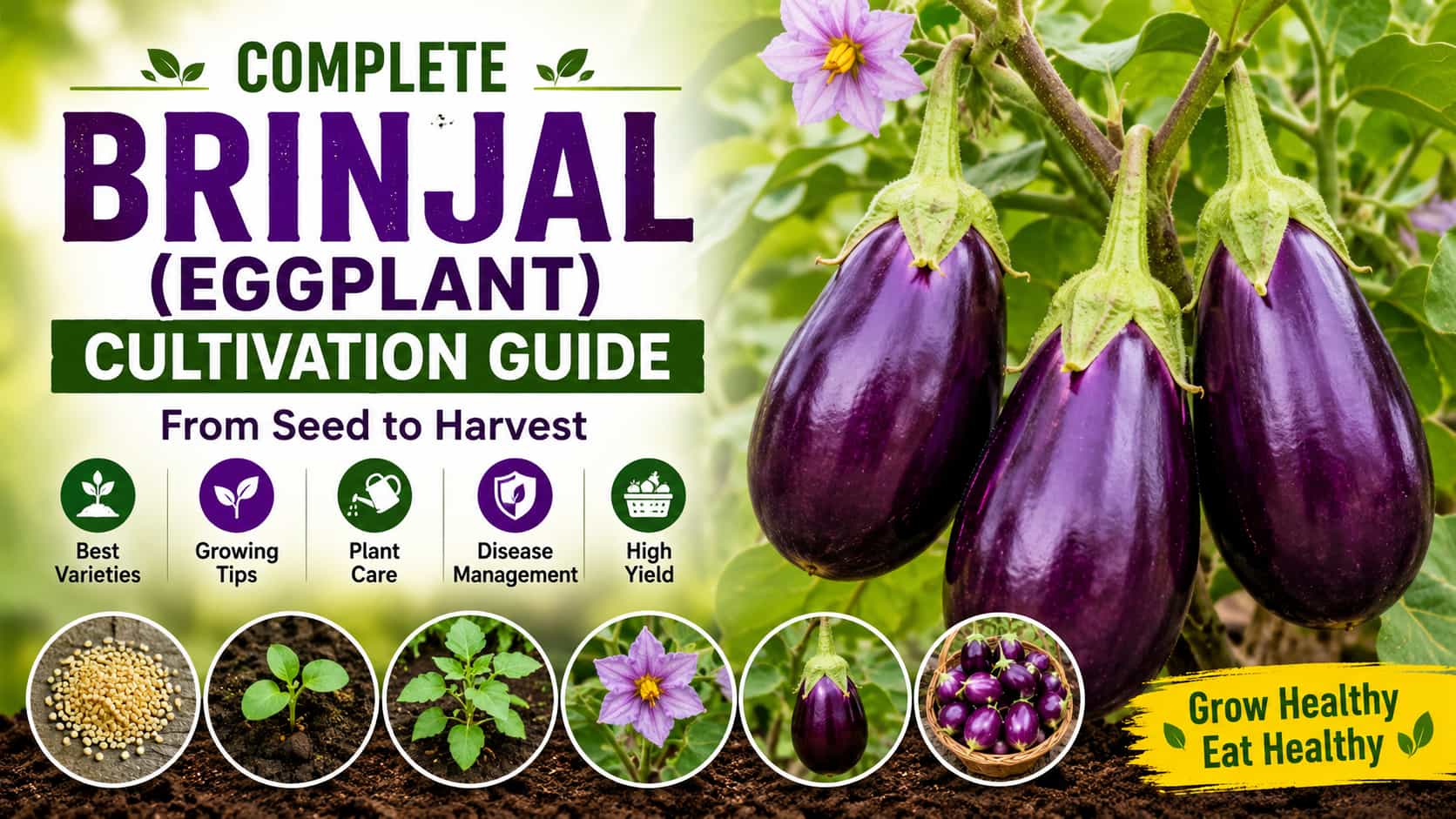
🌱 Brinjal Cultivation Guide – Series Links
Part 1 – Planting, Varieties & Nursery Management👉 Complete Brinjal (Eggplant) Cultivation Guide – Part 1Learn about the best brinjal varieties, common names across India, climate requirements, seed selection, nursery preparation, transplanting, spacing, and organic growing practices.
Part 2 – Irrigation, Plant Care & Disease Management
👉 Complete Brinjal (Eggplant) Cultivation Guide – Part 2Explore irrigation practices, plant care, flowering, organic nutrient management, micronutrients, bacterial wilt prevention, and major pest and disease management techniques.
Part 3 – Harvesting, Yield & Seed Saving
👉 Complete Brinjal (Eggplant) Cultivation Guide – Part 3Learn the right harvesting stage, expected yield, seed saving methods, storage tips, and practical recommendations for maximizing brinjal production.
Flowering in Brinjal – Male and Female Flowers
A common misconception among home gardeners is that brinjal produces separate male and female flowers. In reality, brinjal flowers are perfect (bisexual) flowers, meaning each flower contains both the male reproductive organs (stamens) and the female reproductive organ (pistil).
However, not every flower develops into a fruit.
🌸 Common Causes of Flower Drop
- 🌡️ High temperatures or prolonged rainfall
- 🐝 Poor pollination
- 🌿 Excessive nitrogen fertilization
- 💧 Irregular watering
- 🧪 Boron and other micronutrient deficiencies
- 🌬️ Environmental stress
Encouraging natural pollinators such as bees can significantly improve fruit set.
Organic Nutrient Management
Begin feeding the plants about 20–25 days after transplanting. Regular application of organic fertilizers helps maintain healthy growth and improves flowering and fruit production.
Recommended Organic Fertilizers
- 🐄 Well-decomposed Farmyard Manure (FYM)
- 🍂 Compost
- 🪱 Vermicompost
- 🌿 Jeevamrutham
- 🌰 Neem Cake
- 🐟 Fish Amino Acid (FAA)
- 🥚 Egg Amino Acid (EAA)
Apply organic fertilizers every 20–25 days during the growing season. Liquid organic fertilizers are best applied during the early morning or late evening.
Importance of Micronutrients
Besides primary nutrients (Nitrogen, Phosphorus, and Potassium), brinjal requires several micronutrients for healthy vegetative growth, flowering, and fruit development.
| Micronutrient | Deficiency Symptoms |
|---|---|
| Calcium | Deformed young leaves, poor fruit development |
| Boron | Flower drop and poor fruit set |
| Magnesium | Yellowing of older leaves |
| Zinc | Stunted growth and smaller leaves |
| Iron | Yellowing of young leaves (chlorosis) |
| Manganese | Yellow patches between leaf veins |
Correcting Micronutrient Deficiencies
The following organic supplements help maintain balanced plant nutrition:
- 🌿 Panchagavya
- 🌱 Jeevamrutham
- 🌊 Seaweed Extract
- 🍃 Organic Micronutrient Mixtures
Regular application improves flowering, fruit setting, and overall plant health.
Bacterial Wilt in Brinjal
Bacterial Wilt, caused by Ralstonia solanacearum, is one of the most destructive diseases affecting brinjal cultivation. It spreads through contaminated soil and water and can destroy entire plants within a short period.
Symptoms
- 🍂 Sudden wilting of leaves without yellowing
- 🌿 Entire plant collapses while remaining green
- ✂️ Milky bacterial ooze may appear when the stem is cut
- 🪴 Rapid death of the affected plant
Preventive Measures
- ✅ Select disease-tolerant varieties whenever available.
- ✅ Avoid waterlogging by ensuring proper drainage.
- ✅ Remove and destroy infected plants immediately.
- ✅ Practice crop rotation and avoid continuous cultivation of solanaceous crops such as tomato, chilli, potato, and brinjal in the same field.
- ✅ Apply Trichoderma and Pseudomonas fluorescens to the soil before planting.
- ✅ Drench the root zone every two weeks with a Pseudomonas fluorescens solution (20 g per litre of water) as part of an integrated disease management program.
Prevention is far more effective than attempting to manage the disease after infection.
Major Insect Pests
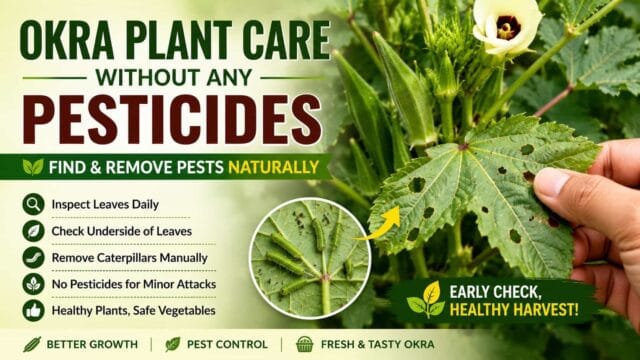
🐛 Shoot and Fruit Borer
This is the most serious insect pest in brinjal cultivation.
Symptoms
- Holes in shoots and fruits
- Wilting of young shoots
- Caterpillars feeding inside the fruits
Management
- Remove and destroy affected shoots and fruits.
- Install pheromone traps to monitor and reduce adult moth populations.
- Spray neem oil or other approved organic botanical pesticides at regular intervals.
🪲 Aphids
Aphids suck sap from tender shoots and leaves, resulting in curling, yellowing, and reduced plant vigour.
Regular neem oil sprays and biological control methods help keep aphid populations under control.
🕷️ Red Spider Mites
Red spider mites are more common during hot and dry weather. They feed on leaf sap, causing yellow speckles and premature leaf drying.
Maintain adequate humidity around the plants and monitor the undersides of leaves regularly for early detection.
Common Diseases
Brinjal is susceptible to several fungal and bacterial diseases, including:
- 🍂 Bacterial Wilt
- 🍁 Leaf Spot
- 🌿 Fungal Blight
- 🍆 Fruit Rot
- 🦠 Root Rot
Good field sanitation, proper spacing, balanced nutrition, and efficient water management are the most effective preventive measures against these diseases.
(Continued in Part 3: Harvesting, Expected Yield, Seed Saving, Storage, Frequently Asked Questions, and Conclusion.)