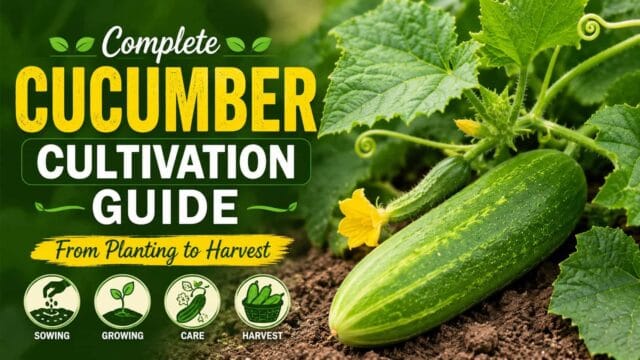

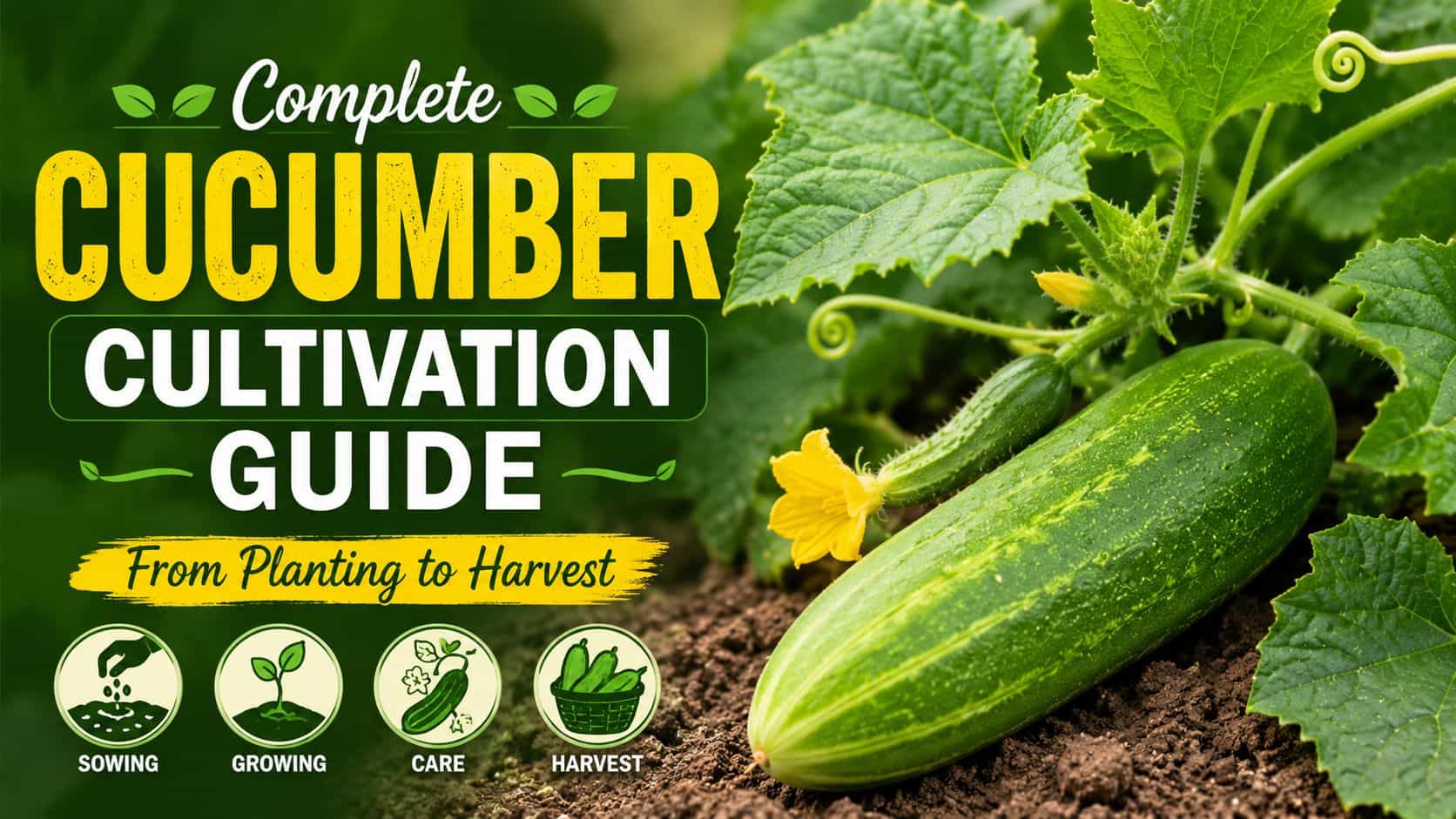
Cucumber is one of the fastest-growing vegetables suitable for home gardens and commercial cultivation. With proper irrigation, balanced organic nutrition, timely pest management, and regular harvesting, cucumber plants can produce a continuous supply of fresh fruits for several weeks.
Harvesting cucumbers at the right stage not only improves fruit quality but also encourages the plant to produce more flowers and fruits. In this part of the guide, you’ll learn about harvesting, expected yield, seed saving, storage, and practical tips for maximizing production.
🌱 Cucumber Growing Guide
🥒 Harvesting Cucumbers
Depending on the variety and growing conditions, cucumber plants usually begin producing harvestable fruits 45–60 days after sowing. Some hybrid varieties may start producing slightly earlier.
Harvest the fruits when they reach the desired size and display the typical colour of the variety.
Avoid leaving cucumbers on the vine for too long because:
- Seeds become hard and fully mature.
- Fruits lose their tender texture.
- The plant reduces the production of new flowers and fruits.
Always harvest using a sharp knife or pruning shears, leaving a short portion of the stem attached. Pulling the fruits by hand may damage the vines.
Regular harvesting every 2–3 days encourages continuous fruit production.
📊 Expected Yield
Cucumber yield depends on the variety, climate, nutrition, irrigation, and overall crop management.
| Growing Method | Expected Yield |
|---|---|
| Grow Bag | 3–6 kg per plant |
| Home Garden | 4–8 kg per plant |
| Open Field Cultivation | 20–35 tonnes per hectare |
| Hybrid Varieties | Higher yields under good management |
Actual yield may vary depending on weather conditions, soil fertility, pollination, and the variety grown.
🌱 Seed Saving
Gardeners can easily save cucumber seeds for future planting.
How to Save Seeds
- 🥒 Select healthy, disease-free plants.
- 🟡 Allow one or two fruits to mature completely on the vine until they turn yellow or orange.
- ✂️ Cut the fruit open and remove the seeds.
- 💧 Wash the seeds thoroughly to remove the pulp.
- 🌤️ Dry them completely in the shade.
- 📦 Store the dried seeds in an airtight container in a cool, dry place.
Properly stored cucumber seeds generally remain viable for 5–6 years.
📦 Storage
Fresh cucumbers are highly perishable and should be handled carefully after harvesting.
Storage Tips
- 🏡 Store in a cool, well-ventilated place.
- ❄️ Refrigeration helps maintain freshness for 7–10 days.
- 💧 Do not wash cucumbers before storage.
- 🥒 Wash only before consumption.
Freshly harvested cucumbers always provide the best taste, texture, and nutritional value.
🌿 Tips for Higher Yield
- ☀️ Provide at least 6–8 hours of direct sunlight daily.
- 🪴 Train the vines on a trellis for better fruit quality and easier harvesting.
- 🐝 Encourage bees and other pollinators by growing flowering plants nearby.
- 🌱 Apply organic fertilizers regularly.
- 💧 Maintain consistent soil moisture throughout the growing season.
- 🍂 Remove diseased leaves and damaged fruits immediately.
- 🥒 Harvest fruits regularly to stimulate continuous flowering and fruit production.
❓Frequently Asked Questions
What is the best season to grow cucumbers?
In Kerala, cucumbers can be grown during multiple seasons, but February to March is generally considered the best planting period for obtaining high yields.
Can cucumbers be grown in grow bags?
Yes. Cucumbers grow very well in grow bags. Choose a grow bag measuring at least 24 × 24 inches, filled with a fertile, well-drained growing medium enriched with organic compost.
Why do cucumber flowers drop without producing fruits?
Poor pollination, lack of bees, excessive heat, boron deficiency, and irregular watering are the most common causes of flower drop and poor fruit set.
Which is the most destructive pest in cucumber?
Fruit Fly is the most serious insect pest affecting cucumbers. Using pheromone traps, neem oil sprays, and covering young fruits with paper bags can significantly reduce infestation.
Which organic fertilizers are best for cucumbers?
Well-decomposed farmyard manure, compost, vermicompost, neem cake, Fish Amino Acid (FAA), Egg Amino Acid (EAA), Jeevamrutham, and Panchagavya are excellent organic nutrient sources for cucumber cultivation.
Is a trellis necessary for cucumber cultivation?
Yes. Growing cucumber vines on a trellis improves air circulation, reduces disease incidence, produces cleaner fruits, saves space, and makes harvesting easier.
🌱 Conclusion
Cucumber is one of the most rewarding vegetables for home gardens, terrace gardens, grow bags, and open-field cultivation. By selecting quality seeds, preparing fertile soil, providing balanced organic nutrition, ensuring proper pollination, managing pests and diseases naturally, and harvesting fruits regularly, gardeners can enjoy a healthy and continuous cucumber harvest throughout the growing season.
Whether you are growing cucumbers for your family or on a larger scale, following good organic cultivation practices will improve plant health, increase yield, and produce fresh, nutritious fruits with excellent flavour.