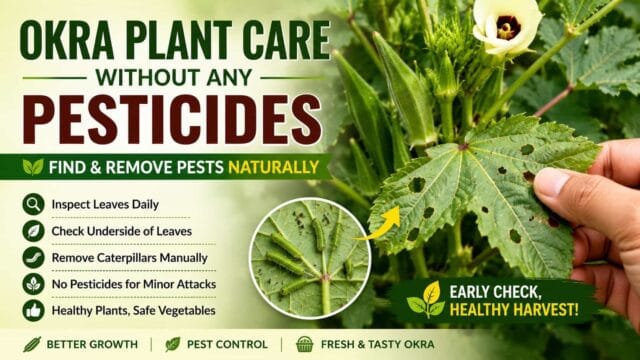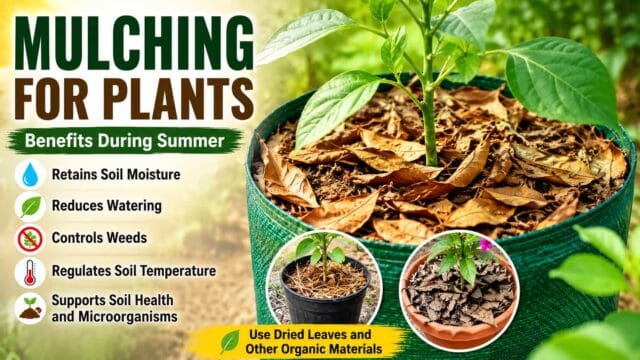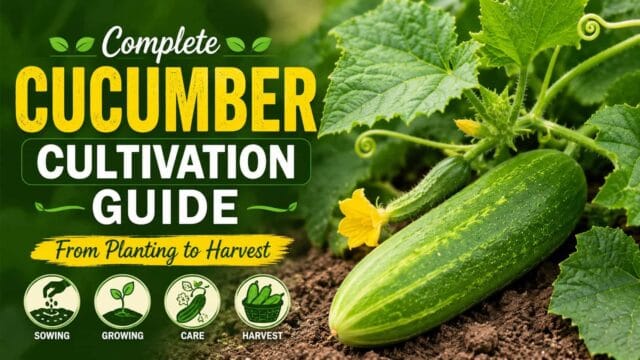

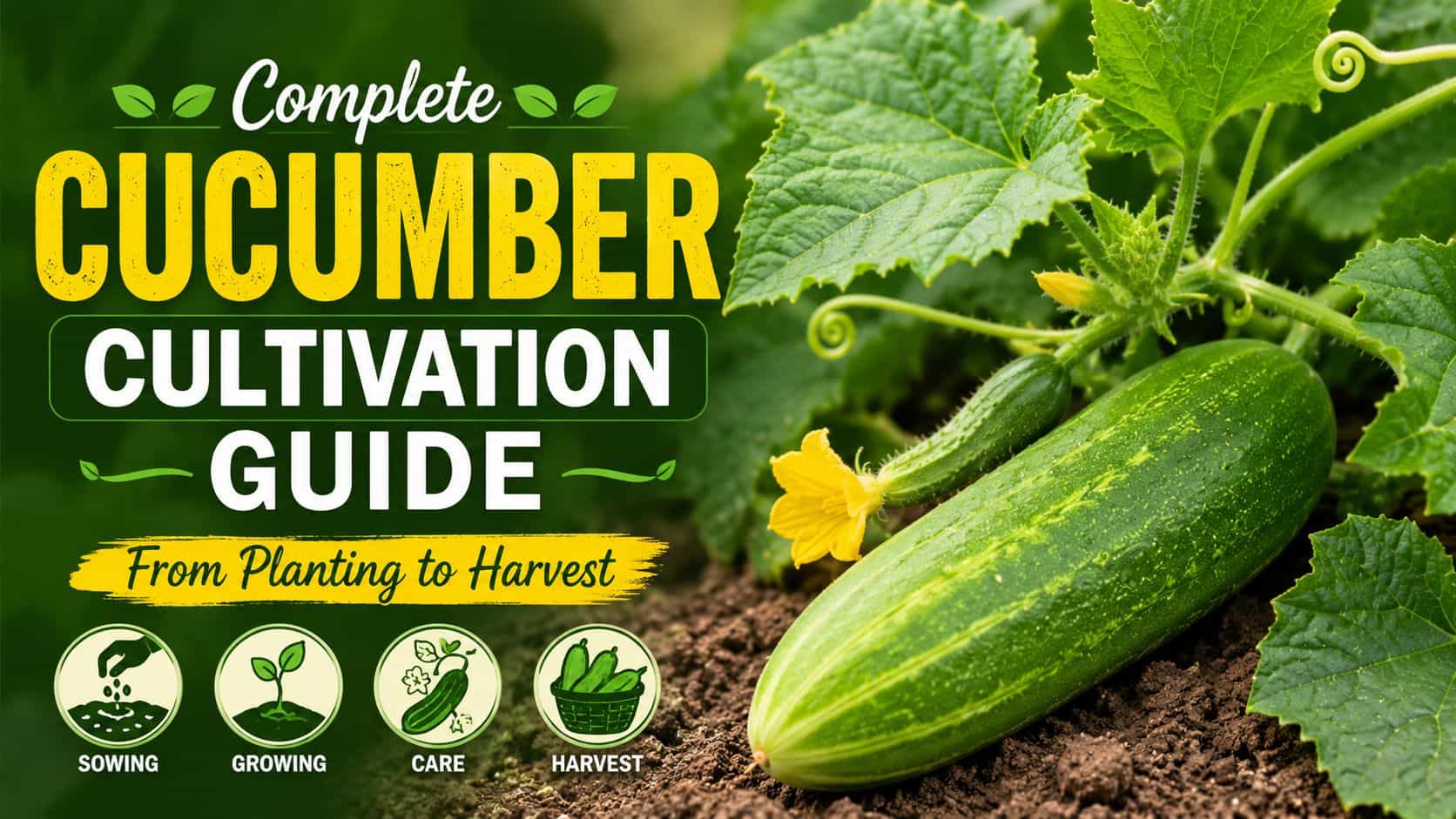
Healthy cucumber plants require proper irrigation, successful pollination, balanced nutrition, and timely pest and disease management to produce high yields. Although cucumber vines produce plenty of flowers, poor pollination often results in fewer fruits. Likewise, fruit flies and fungal diseases become major challenges during the rainy season.
In this part of the guide, you’ll learn about cucumber flowers, pollination, irrigation, common pests and diseases, and effective organic management practices.
🌱 Cucumber Growing Guide
🌼 Male and Female Flowers in Cucumber
Unlike brinjal, cucumber plants produce separate male and female flowers on the same vine.
🌼 Male Flowers
- Usually appear first on young plants.
- Do not have a tiny cucumber behind the flower.
- Produce pollen required for pollination.
🌸 Female Flowers
- Have a small cucumber-like ovary behind the flower.
- Develop into fruits only after successful pollination.
🐝 Importance of Pollination
Proper pollination is essential for good fruit set and high yields.
Bees, butterflies, and other beneficial insects are the primary pollinators of cucumber flowers.
Factors That Reduce Pollination
- 🌧️ Continuous rainfall
- 🌡️ Extremely high temperatures
- 🐝 Low pollinator activity
- 🧪 Excessive use of chemical pesticides
Poor pollination usually causes young fruits to turn yellow, stop growing, and eventually drop from the plant.
✋ Hand Pollination
If pollinator activity is low, especially in terrace gardens and grow bags, hand pollination can improve fruit production.
How to Hand Pollinate
- Perform pollination between 6:00 AM and 9:00 AM.
- Pick a freshly opened male flower.
- Gently transfer its pollen onto the stigma of a female flower.
- A soft paintbrush can also be used for transferring pollen.
This simple practice significantly improves fruit set in home gardens.
💧 Irrigation
Cucumber plants require consistent soil moisture throughout their growing period.
Best Irrigation Practices
- Water regularly during summer.
- Avoid waterlogging during the rainy season.
- Apply water only around the root zone.
- Avoid frequent overhead watering, as wet foliage encourages fungal diseases.
- Mulching helps conserve soil moisture and suppress weeds.
Irregular watering may lead to poor fruit development and bitter-tasting cucumbers.
🌿 Organic Liquid Fertilizers
During flowering and fruit development, regular feeding with organic liquid fertilizers improves both yield and fruit quality.
Recommended organic fertilizers include:
- 🐟 Fish Amino Acid (FAA)
- 🥚 Egg Amino Acid (EAA)
- 🌱 Jeevamrutham
- 🌿 Panchagavya
- 🌊 Seaweed Extract
Apply every 10–15 days during the fruiting stage.
🧪 Importance of Micronutrients
Micronutrients play an important role in flowering, fruit setting, and healthy vine growth.
| Micronutrient | Deficiency Symptoms |
|---|---|
| Boron | Poor fruit set and flower drop |
| Calcium | Poor fruit development |
| Magnesium | Yellowing of older leaves |
| Zinc | Stunted plant growth |
| Iron | Yellowing of young leaves |
Balanced nutrition ensures healthy vines and continuous fruit production.
🐛 Major Pests of Cucumber
🪰 Fruit Fly
Fruit fly is one of the most destructive pests affecting cucumber cultivation.
Symptoms
- Small puncture marks on fruits
- Maggots feeding inside the fruit
- Fruits rot prematurely and become unsuitable for consumption
Organic Management
- Cover young fruits with paper bags or cloth bags.
- Install Methyl Eugenol pheromone traps.
- Collect and destroy infested fruits.
- Spray neem oil regularly.
🪲 Aphids
Aphids suck sap from tender shoots and leaves, causing curling, yellowing, and reduced plant vigour.
Management
- Neem oil spray
- Sticky yellow traps
- Biological control methods
🕷️ Red Spider Mites
Red spider mites are more common during hot and dry weather.
Inspect the underside of leaves regularly and begin control measures as soon as the first signs appear.
🍂 Common Diseases
🌿 Downy Mildew
Symptoms
- Yellow patches on the upper leaf surface
- Grey or purple fungal growth on the underside
- Premature drying of leaves
🍃 Powdery Mildew
Symptoms
- White powder-like fungal growth on leaves
- Drying of foliage
- Reduced plant growth and fruit production
🦠 Bacterial Wilt
Bacterial wilt is more likely to occur in poorly drained soils.
Prevention
- Apply Trichoderma before planting.
- Use Pseudomonas fluorescens as a soil drench.
- Ensure proper drainage.
- Practice crop rotation.
🌱 Organic Disease Management
The following practices help reduce disease incidence naturally:
- 🌿 Apply Pseudomonas fluorescens regularly.
- 🍄 Incorporate Trichoderma into the soil.
- 🌰 Spray neem oil as a preventive measure.
- 🌊 Use seaweed extract to improve plant health.
- 🍂 Remove diseased leaves immediately.
- 🌬️ Maintain good air circulation around the plants.
🌿 Tips for Better Yield
- ☀️ Provide at least 6–8 hours of direct sunlight daily.
- 🪴 Grow vines on a trellis for better fruit quality and easier harvesting.
- 🐝 Encourage bees and other pollinators by growing flowering plants nearby.
- 💧 Maintain consistent soil moisture.
- 🌱 Feed the plants regularly with organic fertilizers.
- 🥒 Harvest mature fruits frequently to encourage continuous production.
(Part 3 will cover harvesting, expected yield, seed saving, storage, frequently asked questions, and a complete conclusion.)