
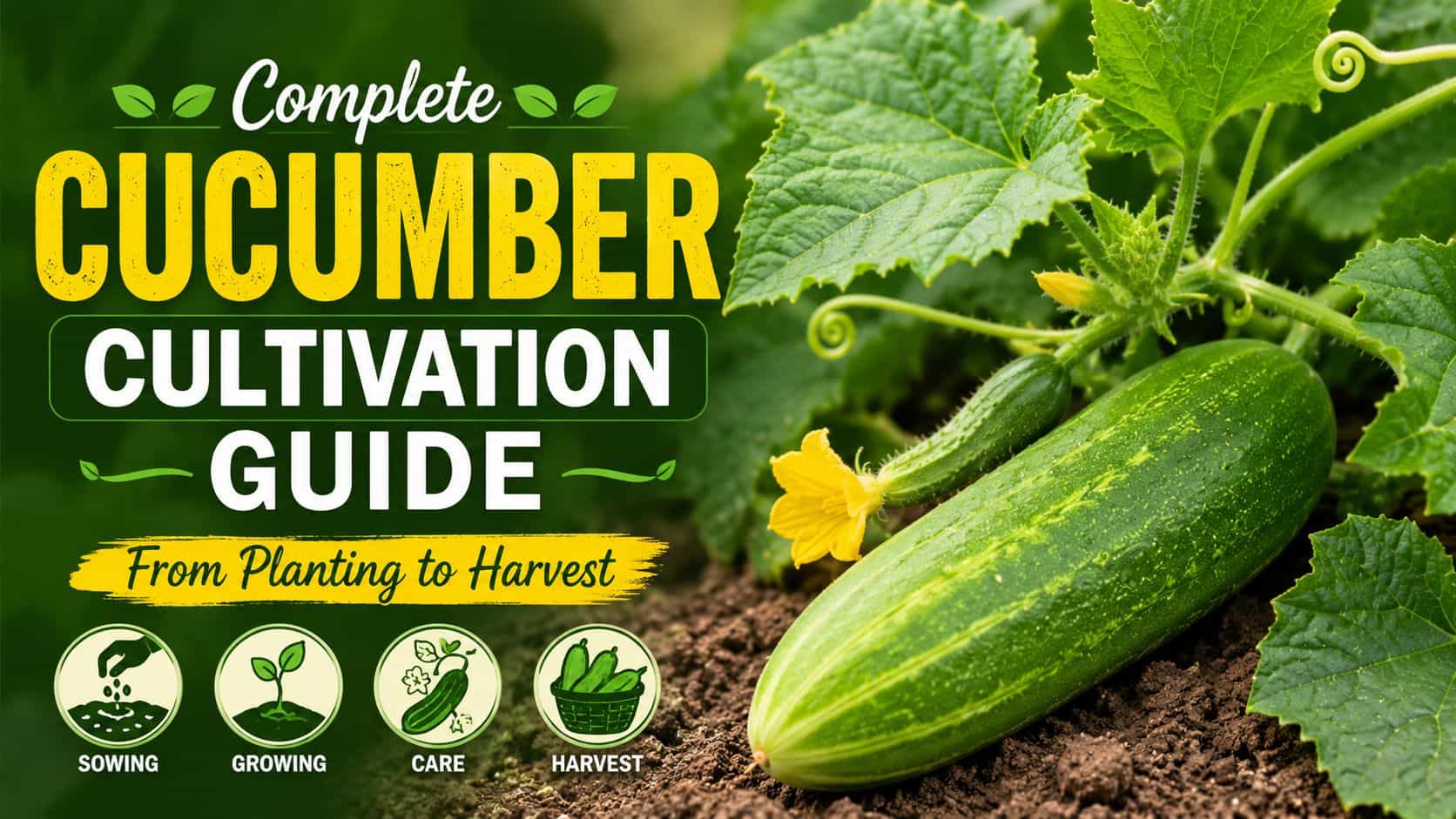
Cucumber (Cucumis sativus) is one of the easiest and fastest-growing vegetables for home gardens. Rich in water, vitamins, and antioxidants, cucumbers are widely used in salads, curries, raita, juices, and refreshing summer drinks. They thrive in warm weather and can be grown successfully in kitchen gardens, terrace gardens, grow bags, raised beds, and open fields.
With proper seed selection, healthy soil, regular watering, and organic nutrient management, cucumber plants begin producing fruits within a short period and continue yielding for several weeks. This guide covers everything from seed selection and planting to organic fertilization and early plant care.
🌱 Cucumber Growing Guide
Common Names of Cucumber in India
| Language | Name |
|---|---|
| English | Cucumber |
| Malayalam | Vellarikka |
| Hindi | Kheera |
| Tamil | Vellarikkai |
| Telugu | Dosakaya / Keera Dosakaya |
| Kannada | Soutekayi |
| Marathi | Kakdi |
| Gujarati | Kakdi |
| Bengali | Shosha |
| Punjabi | Kheera |
| Odia | Kakudi |
Why Grow Cucumbers?
Cucumber is an excellent vegetable for beginners as well as experienced gardeners.
Some of its major advantages include:
- 🥒 Fast-growing and early harvesting crop
- 🌱 Suitable for grow bags, containers, and open fields
- 💧 High water content and excellent nutritional value
- 🏡 Perfect for home vegetable gardens
- 🌿 Easy to grow using organic farming methods
- 📈 Produces fruits continuously with proper care
Best Season for Cucumber Cultivation
Cucumber prefers warm weather and plenty of sunshine. In Kerala and many tropical regions of India, it can be cultivated during multiple seasons.
| Season | Suitable Planting Period |
|---|---|
| Summer Crop | January – March |
| Summer–Monsoon Crop | April – June |
| Second Crop | August – December |
🌞 February to March is generally considered the best planting season for obtaining vigorous growth and higher yields.
Popular Cucumber Varieties in India
| Variety | Characteristics |
|---|---|
| Mudikkode Local | Traditional Kerala variety with excellent taste |
| Sowbhagya | High-yielding variety |
| Arunima | Improved variety with good productivity |
| Kani Vellarikka | Popular Kerala cucumber variety |
| Golden Cucumber | Attractive golden-yellow fruits |
| Pusa Uday | Improved variety with high yield |
| Pusa Barkha | Better disease tolerance |
| F1 Hybrid Varieties | Uniform fruits and higher production |
Choosing Quality Seeds
Healthy seeds are the foundation of a productive cucumber crop.
Purchase seeds from reliable sources such as:
- 🌾 Krishi Bhavan
- 🌱 Krishi Vigyan Kendra (KVK)
- 🌿 VFPCK
- 🏪 Certified seed suppliers and garden stores
Always select healthy, disease-free, and high-quality seeds for better germination and plant vigour.
Seed Treatment
Treating seeds before sowing helps protect young seedlings from several soil-borne diseases.
A simple method is to soak the seeds in a Pseudomonas fluorescens solution for about two hours before sowing. Allow the seeds to dry in the shade before planting.
Land Preparation
Choose a sunny location with well-drained, fertile soil rich in organic matter.
Before planting:
- Loosen the soil thoroughly.
- Remove weeds and stones.
- Incorporate organic manure into the planting pits or beds.
Recommended Basal Organic Manure
- 🐄 Well-decomposed Farmyard Manure (FYM)
- 🍂 Compost
- 🦴 Bone Meal (about 50 g per planting pit)
- 🌰 Neem Cake
Organic matter improves soil fertility, drainage, and moisture retention.
Planting Method
Sow 4–5 seeds in each planting pit.
Recommended Plant Spacing
| Growing Method | Spacing |
|---|---|
| Open Field | 2 m × 2 m |
| Raised Beds | 1.5–2 m |
| Grow Bags | One healthy plant per grow bag |
Cover the seeds lightly with soil and irrigate gently.
Seedling Care
Seeds usually germinate within 3–4 days under favourable conditions.
About two weeks after germination, retain only the two or three healthiest seedlings in each pit and remove the weaker ones.
Water regularly to keep the soil evenly moist, but avoid waterlogging.
Organic Nutrient Management
Apply additional organic fertilizers as the vines begin to spread and again during flowering.
Recommended organic fertilizers include:
- 🪱 Vermicompost
- 🐄 Farmyard Manure
- 🍂 Compost
- 🌰 Neem Cake
- 🐟 Fish Amino Acid (FAA)
- 🥚 Egg Amino Acid (EAA)
After flowering, applying a liquid organic manure every 10–15 days helps improve fruit production and overall plant health.
Benefits of Trellising
Growing cucumber vines on a trellis offers several advantages:
- Better air circulation
- Cleaner and straighter fruits
- Reduced disease incidence
- Easier harvesting
- Improved sunlight exposure
- Better fruit quality
For terrace gardens and grow bags, using a trellis or vertical support system is highly recommended.
(Part 2 will cover irrigation, flowering, pollination, fruit fly management, powdery mildew, downy mildew, common pests and diseases, and organic control methods.)