
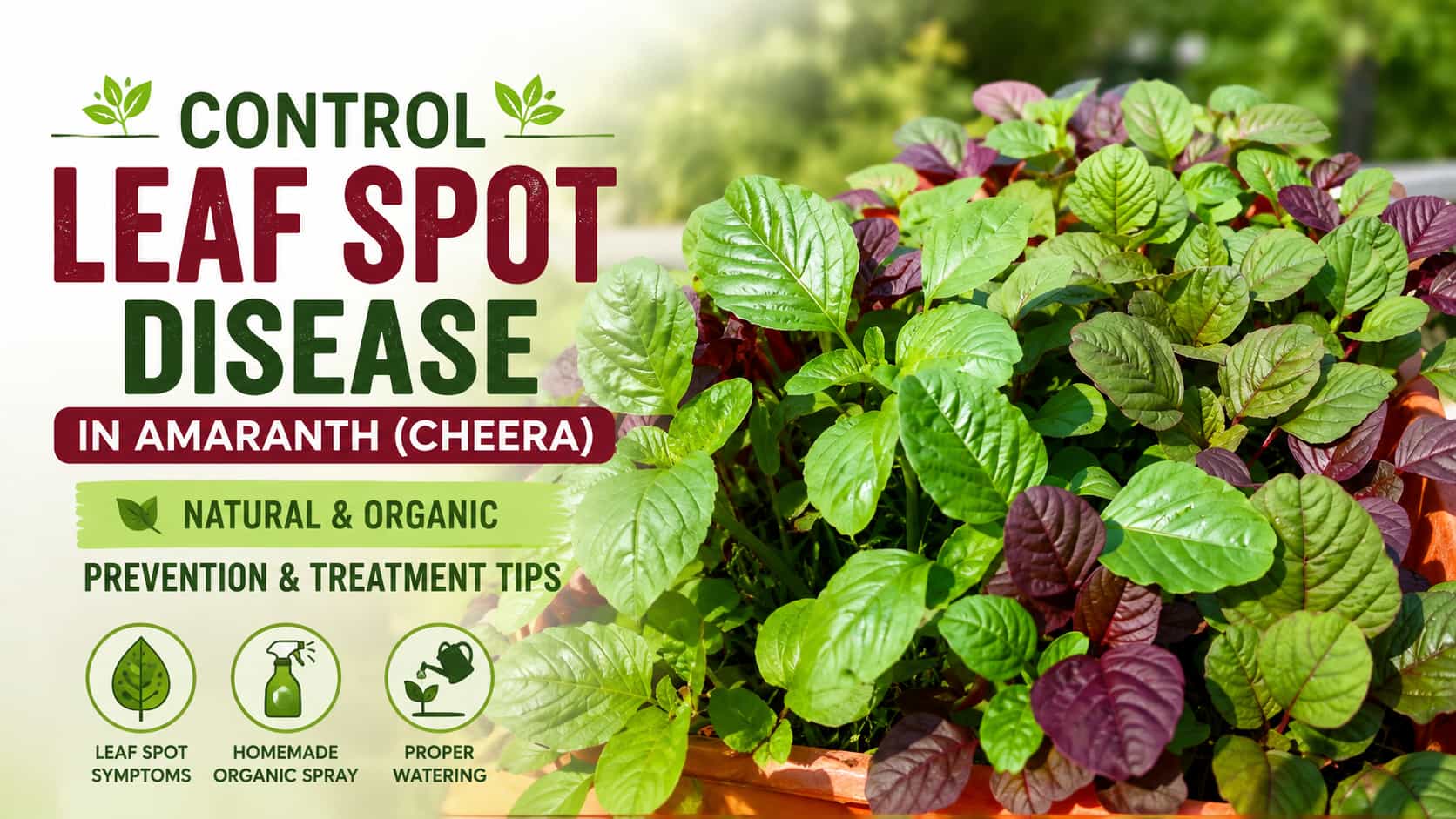
Leaf Spot Disease is one of the most common problems affecting Amaranth (Cheera), especially during the rainy season when humidity is high. Although amaranth is generally an easy vegetable to grow with minimal pest issues, prolonged moisture on leaves can encourage fungal diseases that reduce plant health and yield.
The good news is that Leaf Spot Disease can often be managed effectively using simple organic practices, without relying on chemical fungicides. By following proper irrigation methods, maintaining good field hygiene, and using homemade organic sprays, you can protect your amaranth crop and enjoy healthy harvests.
Quick Tips to Prevent Leaf Spot Disease
| 🌿 Practice | ✅ Benefit |
|---|---|
| Grow green and red amaranths together | May help reduce disease incidence in red varieties |
| Water only at the base of the plants | Prevents prolonged leaf wetness |
| Avoid overhead irrigation | Reduces fungal infection on leaves |
| Remove infected leaves immediately | Prevents the disease from spreading |
| Maintain proper plant spacing | Improves air circulation |
| Apply organic preventive sprays regularly | Helps reduce fungal growth |
What is Leaf Spot Disease?
Leaf Spot Disease is a fungal disease commonly seen in amaranth during wet and humid weather. Under favourable conditions, fungi such as Rhizoctonia solani can infect the leaves, causing spots that gradually spread across the plant.
If left unmanaged, the disease can weaken the plants, reduce leaf quality, and significantly lower the harvest.
Common Symptoms
- 🍃 Small translucent or pale spots on lower leaves
- 🍂 Spots gradually enlarge and spread
- 🌿 White or light-coloured patches appear on infected leaves
- 🍁 Older leaves dry up and fall off
- 📉 Reduced plant growth and lower yield
Remove infected leaves as soon as they appear and destroy them away from the growing area to prevent further spread.
Grow Green and Red Amaranths Together
Based on practical gardening experience, red amaranth is generally more susceptible to leaf spot disease, while green amaranth often shows better tolerance under similar growing conditions.
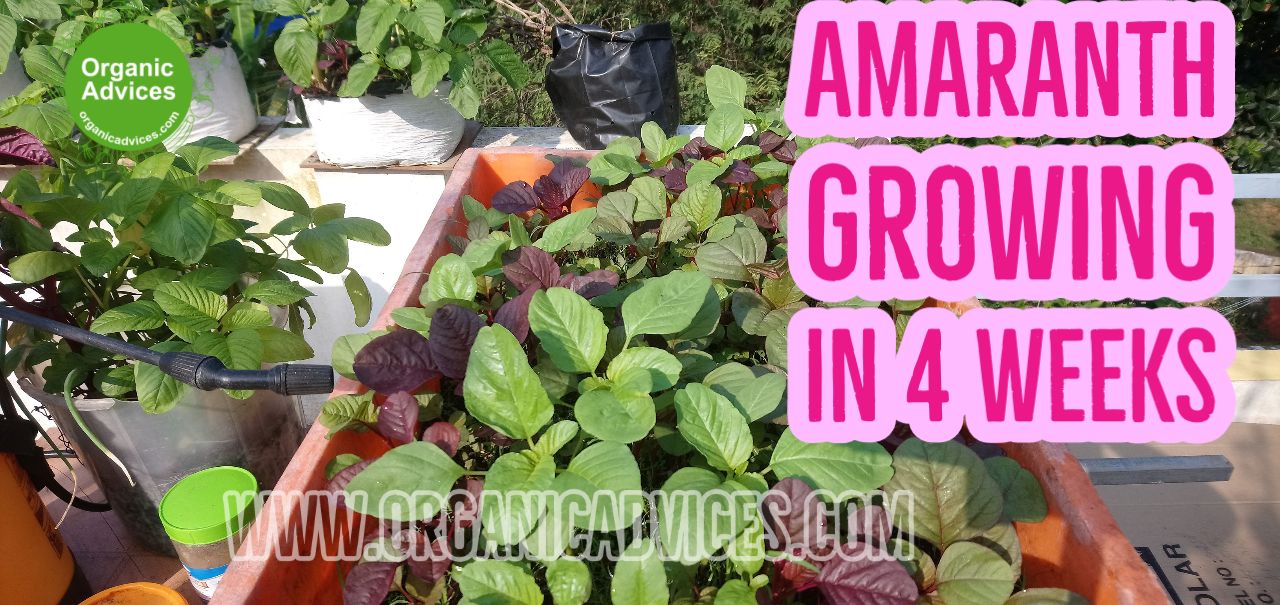
Growing green and red amaranths together or in alternate rows may help reduce disease pressure and improve the overall health of the crop.
Note: Disease resistance varies depending on the variety, climate, and field conditions. This practice is based on field observations and may not completely eliminate the disease.
Avoid Sprinkling Water on the Leaves
🌱 OrganicAdvices Field Experience
One of the most effective preventive measures we observed was avoiding overhead watering.
During our cultivation trials, leaf spot disease appeared more frequently in beds where water was regularly sprinkled over the foliage. After switching to watering only at the base of the plants, disease incidence reduced noticeably.
For healthier plants:
- 💧 Water only around the root zone.
- 🌅 Irrigate during the morning.
- 🍃 Avoid leaving leaves wet overnight.
- 🌬️ Ensure good air circulation between plants.
Homemade Organic Spray for Leaf Spot Disease
A simple organic spray prepared from common household ingredients can help suppress fungal growth during the early stages of the disease.
Ingredients
- 🟡 Asafoetida (Hing) – 10 g
- 🟨 Turmeric Powder – 8 g
- 🥄 Baking Soda – 2 g
- 💧 Water – 2.5 litres
Preparation
- Crush the asafoetida into small pieces.
- Dissolve it in 2.5 litres of water.
- Add turmeric powder and baking soda.
- Mix thoroughly.
- Filter the solution before filling the sprayer.
Application
- Spray both the upper and lower surfaces of the leaves.
- Apply during the early morning or late evening.
- Repeat every 7–10 days if necessary.
- Reapply after heavy rainfall.
Note: This homemade spray works best as a preventive measure or when the disease is detected in its early stages.
Additional Organic Management Practices
Besides the homemade spray, the following methods can further reduce disease incidence:
- 🌿 Maintain proper spacing between plants.
- 🍂 Remove diseased leaves immediately.
- 🌞 Grow plants in locations with good sunlight and air circulation.
- 🌱 Avoid excessive nitrogen fertilization, which encourages dense foliage.
- 🪴 Keep the growing area clean by removing fallen infected leaves.
- 🌧️ Prevent waterlogging around the root zone.
Frequently Asked Questions
Is Leaf Spot Disease common in amaranth?
Yes. It is more common during the rainy season and in conditions of high humidity.
Can the disease be controlled without chemical fungicides?
In many cases, yes. Early detection, proper irrigation, field sanitation, and regular use of organic preventive sprays can effectively reduce disease severity.
Why should overhead watering be avoided?
Water remaining on the leaves for long periods creates favourable conditions for fungal spores to germinate and spread.
Which type of amaranth is more susceptible?
Based on field observations, red amaranth tends to be affected more frequently than green amaranth, although susceptibility varies with variety and growing conditions.
Conclusion
Leaf Spot Disease does not have to ruin your amaranth crop. Simple preventive practices such as growing green and red amaranths together, avoiding overhead watering, maintaining proper spacing, and removing infected leaves can significantly reduce disease problems. Combined with a homemade organic spray made from asafoetida, turmeric powder, and baking soda, these practices offer an eco-friendly approach to growing healthy, chemical-free amaranth throughout the season.