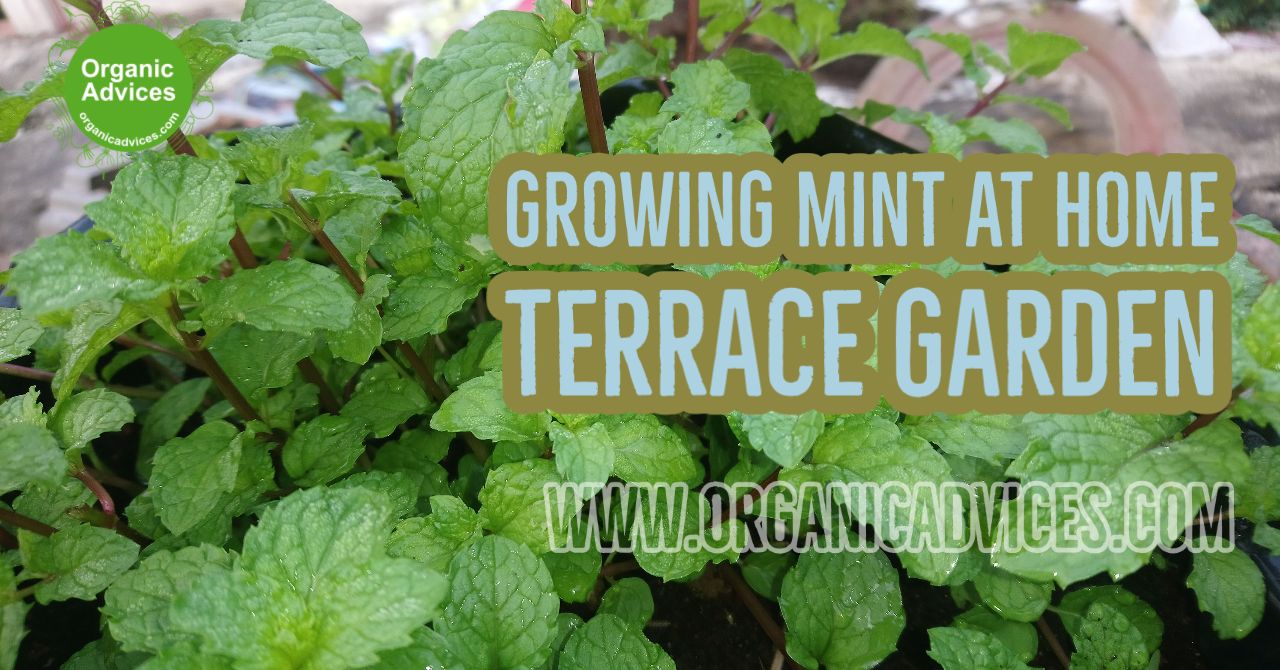

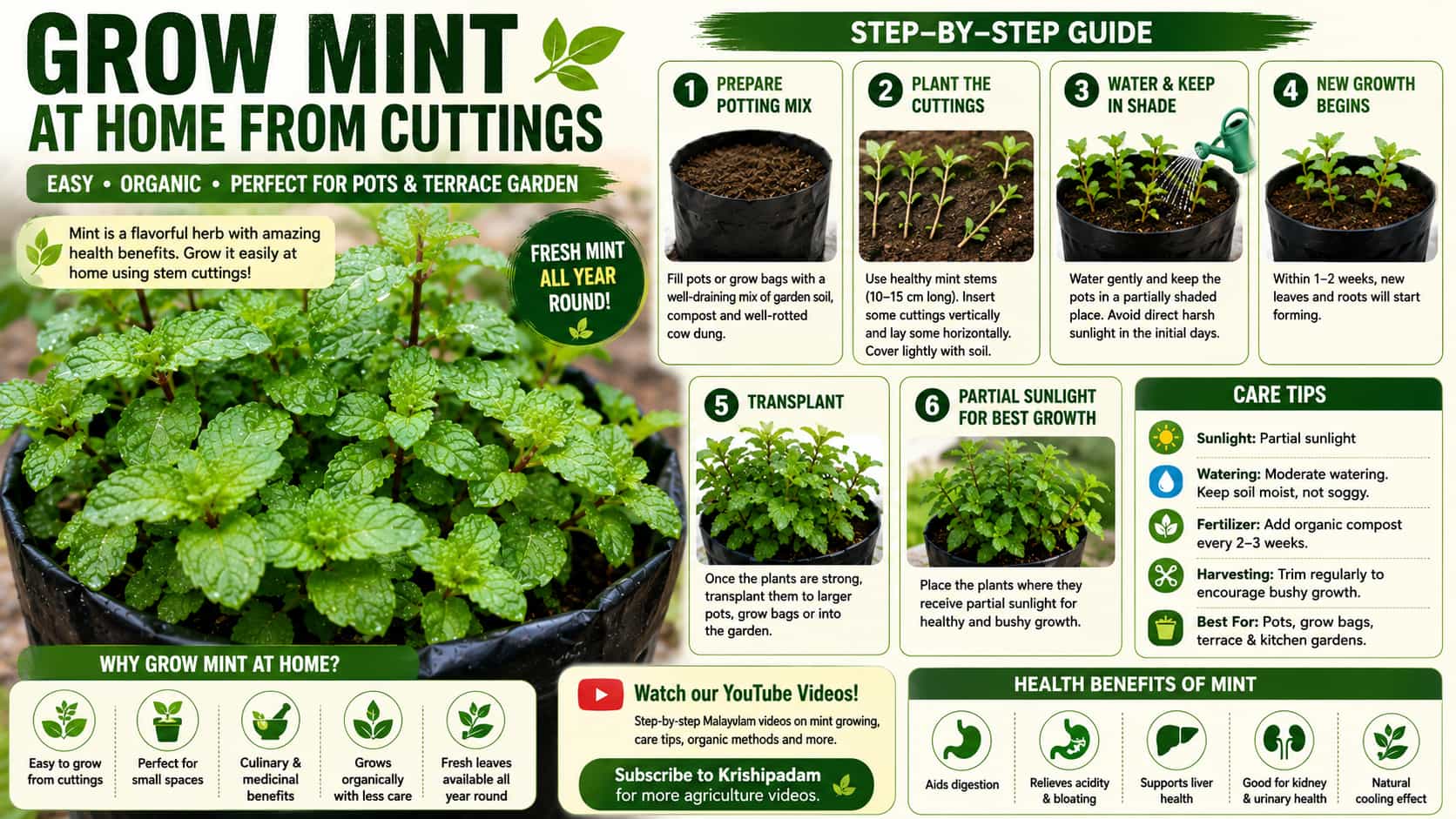
Growing mint (Mentha) at home is one of the easiest ways to enjoy a fresh supply of aromatic herbs throughout the year. Instead of starting from seeds, mint grows very successfully from stem cuttings, making it an excellent choice for beginners, terrace gardeners, and kitchen garden enthusiasts.
Besides enhancing the flavor of curries, chutneys, and beverages, mint is also valued for its traditional medicinal properties. It is commonly used to support digestion, relieve acidity, and promote overall digestive health.
🌱 Benefits of Growing Mint
| 🌿 Benefit | 📋 Description |
|---|---|
| 🍃 Easy to Grow | Propagates quickly from stem cuttings |
| 🪴 Perfect for Containers | Ideal for pots, grow bags, and terrace gardens |
| 🍲 Culinary Herb | Adds fresh flavor to food and drinks |
| 💚 Medicinal Value | Traditionally used to aid digestion and relieve acidity |
| 🌞 Low Maintenance | Requires only partial sunlight and moderate watering |
🌿 How to Grow Mint from Stem Cuttings
Mint can be propagated easily using healthy stem cuttings.
🪴 Step 1 – Prepare the Potting Mix
Fill small nursery bags, pots, or grow bags with a well-draining potting mix consisting of:
- 🌱 Garden soil
- 🌿 Organic compost
- 🐄 Well-rotted cow dung manure
This nutrient-rich mixture encourages faster root development.
✂️ Step 2 – Plant the Cuttings
Use fresh mint stems about 10–15 cm (4–6 inches) long.
There are two effective planting methods:
- 🌿 Insert some cuttings vertically into the soil.
- 🌱 Lay a few cuttings horizontally and lightly cover part of the stem with soil, leaving the growing tip exposed.
Using both methods increases the chances of successful rooting.
💧 Step 3 – Water and Keep in Shade
Water the soil lightly after planting.
Keep the containers in a partially shaded location for the first couple of weeks. Avoid direct afternoon sunlight while the cuttings establish roots.
🌱 Step 4 – Root Development
Within two weeks, healthy cuttings begin producing new leaves and roots.
Once vigorous growth starts, transplant them into:
- 🪴 Larger pots
- 🌱 Grow bags
- 🌿 Kitchen garden beds
Move the plants to a location that receives partial sunlight for better growth.
⚠️ Common Mistakes to Avoid
Many gardeners fail because they:
| ❌ Mistake | ✅ Solution |
|---|---|
| Overwatering | Keep the soil moist, not waterlogged |
| Planting weak stems | Use fresh, healthy cuttings |
| Too much direct sunlight initially | Keep in partial shade until rooted |
| Poor potting mix | Use compost-rich, well-draining soil |
🌿 Mint Plant Care Tips
| 🌱 Care | Recommendation |
|---|---|
| ☀️ Sunlight | Partial sunlight |
| 💧 Watering | Moderate watering |
| 🌿 Fertilizer | Organic compost every few weeks |
| ✂️ Harvesting | Trim regularly to encourage bushy growth |
| 🪴 Containers | Pots, grow bags, or raised beds |
🎥 Watch Our Mint Growing Videos
Our Krishipadam YouTube channel features step-by-step Malayalam videos explaining how to grow mint from cuttings, prepare potting mix, transplant rooted stems, and care for the plants using organic methods.
If you’re new to gardening, these practical video tutorials will help you achieve a healthy and productive mint plant at home.
🌟 Why Grow Mint at Home?
- 🌿 Easy to propagate from cuttings
- 🪴 Suitable for terrace and kitchen gardens
- 🍃 Fresh leaves available throughout the year
- 🌱 Grows well using organic methods
- 💚 Aromatic herb with traditional medicinal benefits
- ✂️ Regular harvesting encourages continuous growth
🌱 Conclusion
Growing mint from stem cuttings is simple, economical, and highly rewarding. With a healthy cutting, a nutrient-rich organic potting mix, moderate watering, and partial sunlight, you can establish a thriving mint plant within a few weeks. Whether you grow it in a pot, grow bag, or home garden, mint is one of the easiest herbs to cultivate and maintain organically.