
Grow Annual Moringa Successfully with Proper Care, Nutrition, and Flower Management
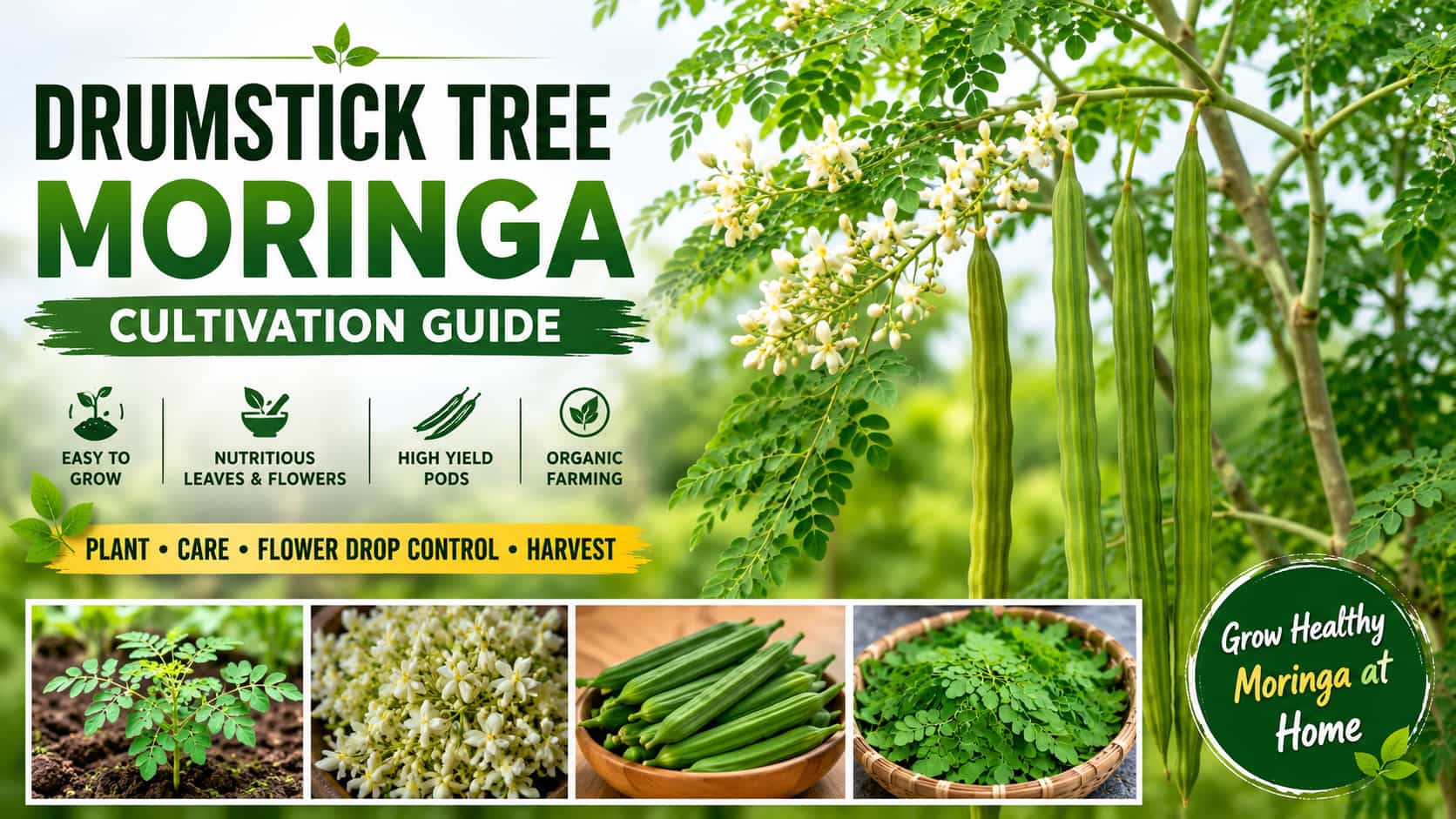
Drumstick tree (Moringa), especially the Annual or Dwarf Moringa, is one of the most rewarding vegetables for home gardens. Its leaves, flowers, and pods are all edible and highly nutritious. With proper care, annual moringa plants begin producing pods within 6–12 months after planting, making them an excellent choice for kitchen gardens and backyard farming.
📋 Drumstick Tree Cultivation at a Glance
| 🌱 Topic | 📌 Details |
|---|---|
| Crop | Annual / Dwarf Moringa |
| Propagation | Seeds or Seedlings |
| Climate | Hot, dry, and semi-arid regions |
| Sunlight | 6–8 hours of direct sunlight |
| Soil | Well-drained fertile soil |
| First Harvest | 6–12 months after planting |
| Growing Location | Backyard gardens, farms, large grow bags |
🌿 Why Grow Drumstick Trees?
Almost every part of the moringa tree is useful.

- 🥬 Leaves for nutritious stir-fries and curries
- 🌼 Flowers for delicious side dishes
- 🥒 Pods for sambar, avial, theeyal, and curries
- 🌱 Tender shoots are also edible
During flowering, some blossoms naturally fall from the tree. This is normal and does not always indicate a problem. Fallen flowers can be collected using a clean plastic sheet or cloth placed beneath the tree.
🌱 Seedlings and Seed Availability
Annual moringa can be propagated using either quality seeds or healthy seedlings.
📌 Availability Note
Older sources may mention specific suppliers or prices, but these may have changed over time.
Before purchasing, check availability at:
- 🌿 Local nurseries
- 🌾 Krishi Bhavan
- 🏛️ Krishi Vigyan Kendras (KVKs)
- 🌱 VFPCK outlets
- 🛒 Agricultural input stores
- 🌐 Trusted online gardening suppliers
Always purchase healthy, disease-free planting material.
🌱 Planting Method
Dig a pit approximately 2 feet × 2 feet × 2 feet.
Mix the topsoil with:
- 🐄 Well-decomposed farmyard manure
- 🍂 Compost
- 🌿 Neem cake (optional)
Plant the seedling and water immediately after planting.
Before the rainy season, ensure proper drainage around the plant to prevent waterlogging.
☀️ Best Climate for Moringa
Moringa thrives in:
- ☀️ Hot climates
- 🌤️ Dry weather
- 🌾 Semi-arid regions
The tree performs best in locations receiving plenty of direct sunlight.
Avoid planting in low-lying areas where water accumulates after rain.
🌿 Organic Fertilizer Schedule
For organic cultivation, use:
- 🐄 Farmyard manure
- 🪱 Vermicompost
- 🌿 Neem cake
- 🦴 Bone meal
- 🐟 Fish Amino Acid (FAA)
- 🌊 Seaweed extract
Apply fertilizers around the drip line rather than directly against the trunk.
Always water the soil before applying fertilizers.
✂️ Pinching the Growing Tip
When the plant reaches 3–4 feet in height, pinch off the growing tip.
Benefits include:
- 🌿 More side branches
- 🌼 Increased flowering
- 🥒 Higher pod production
- 🌳 Easier harvesting
Regular pruning also helps maintain a manageable tree height.
🌼 Managing Flower Drop
Some flower drop is perfectly normal in moringa. However, excessive blossom drop may result from:
- 💧 Water stress
- 🌿 Nutrient deficiencies
- 🐛 Bud-feeding insects
- 🌡️ High temperatures
- 🌬️ Environmental stress
To reduce flower drop:
- 🌿 Apply balanced organic plant nutrients during flowering.
- 🌊 Spray seaweed extract or suitable organic foliar nutrients at recommended intervals.
- 🐟 Fish Amino Acid (FAA) may be used as part of a balanced organic nutrition program.
- 💧 Maintain consistent soil moisture without waterlogging.
- 🐛 Regularly inspect flower buds for insect damage.
Healthy plants generally retain more flowers and produce better pod set.
🐝 Encouraging Natural Pollination
Moringa flowers are naturally pollinated by bees and other beneficial insects.
To encourage better pollination:
- 🐝 Grow flowering plants nearby to attract pollinators.
- 🚫 Avoid spraying insecticides during flowering.
- 🌸 Maintain a pollinator-friendly garden environment.
Note: Spraying sugar water on flowers is not a scientifically recommended practice for improving pollination and may attract ants or other unwanted insects.
💧 Watering
- 🌱 Water newly planted seedlings regularly until established.
- ☀️ During summer, irrigate whenever the soil becomes dry.
- 🌧️ Avoid standing water around the roots.
Once established, moringa tolerates dry conditions better than many vegetable crops.
❓ Frequently Asked Questions
❓ When does annual moringa begin producing pods?
Usually within 6 to 12 months, depending on variety and growing conditions.
❓ Can moringa be grown in grow bags?
Yes, but only in very large grow bags (24–30 inches or larger). Planting directly in the ground gives better long-term growth.
❓ Does moringa need full sunlight?
Yes. At least 6–8 hours of direct sunlight daily is recommended.
❓ Is flower drop normal?
Yes. A certain amount of flower drop is natural. Excessive flower drop usually indicates environmental or nutritional stress.
❓ How can I increase pod production?
- Pinch the growing tip.
- Feed the plant regularly with organic fertilizers.
- Maintain consistent watering.
- Encourage natural pollinators.
- Keep the tree healthy through regular pruning.
🌱 Growing Tip
Pinching the main shoot at the right stage and providing balanced organic nutrition are two of the simplest ways to improve branching, flowering, and pod production in annual moringa. A healthy, well-maintained tree can continue producing quality pods for an extended period.
📌 Note: This guide is based on practical home gardening experience along with commonly recommended horticultural practices. Plant growth, flowering, and yield may vary depending on climate, soil conditions, and the variety grown.