
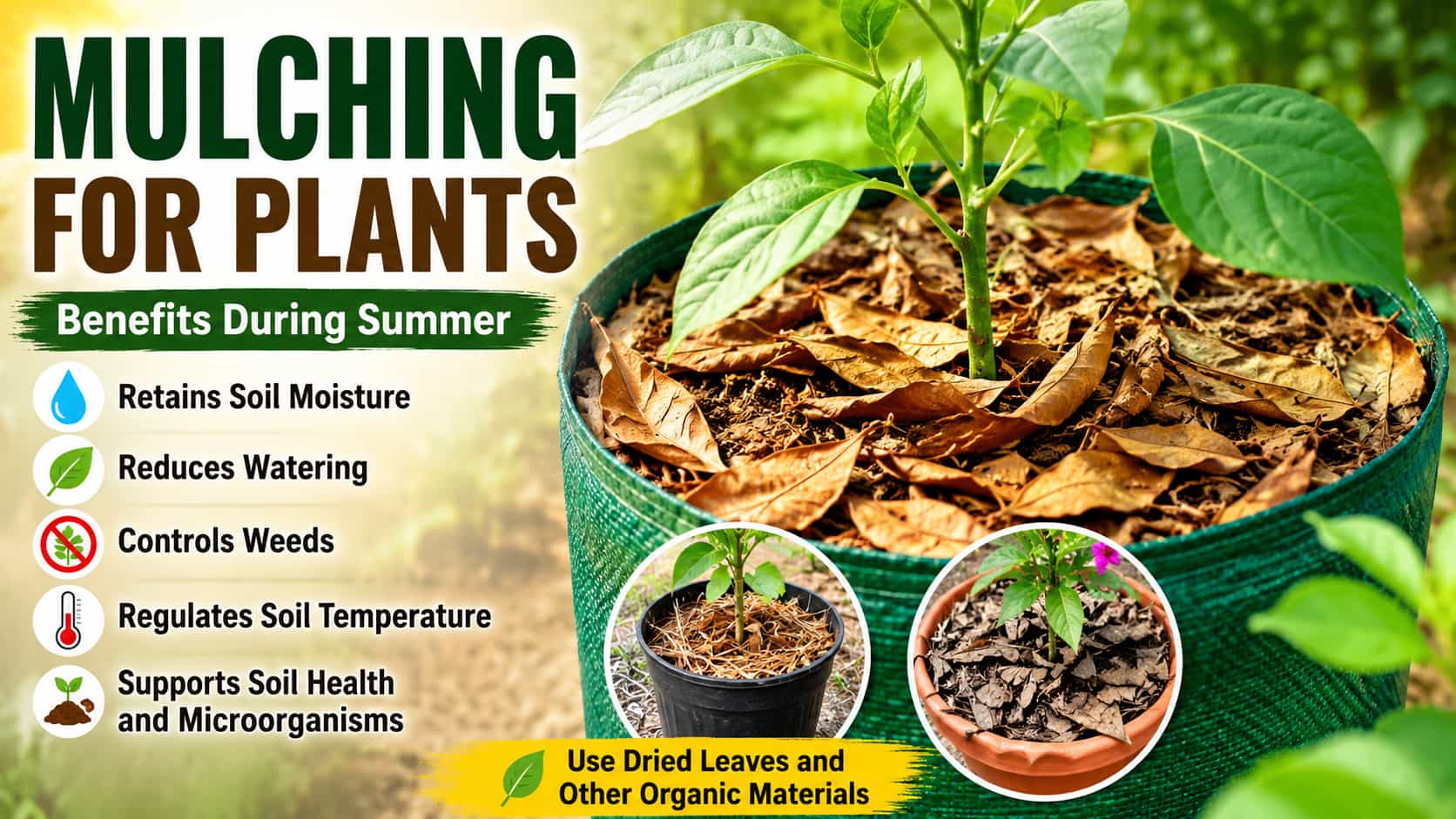
Mulching is a simple and effective agricultural practice used to protect plants, conserve soil moisture and maintain better growing conditions around the root zone. The process involves covering the soil surface around plants with materials such as dry leaves and other organic matter.
Mulching is particularly beneficial during summer, when high temperatures and direct sunlight can cause moisture in the soil to evaporate quickly. A layer of organic material over the soil helps reduce this moisture loss while also providing several other benefits for plants and soil.
What Is Mulching?
Mulching is the practice of covering the exposed soil surface around plants with organic or other suitable materials. Dry leaves and similar organic materials are among the best and most easily available options for this purpose.
The mulch layer acts as a protective covering between the soil and direct sunlight. This helps maintain moisture, regulate soil temperature and create favourable conditions for plant growth.
Mulching at a Glance
| Details | Information |
|---|---|
| Agricultural Practice | Mulching – പുതയിടൽ |
| Main Purpose | Soil moisture conservation |
| Best Time | Particularly beneficial during summer |
| Suitable Material | Dry leaves and other organic materials |
| Water Conservation | Reduces moisture loss from soil |
| Weed Control | Helps suppress weed growth |
| Soil Protection | Reduces direct exposure to sunlight |
| Additional Benefit | Creates favourable conditions for soil microorganisms |
Benefits of Mulching During Summer
Summer is one of the most important periods to consider mulching. Strong sunlight and high temperatures can quickly dry the upper layers of soil, increasing the need for frequent irrigation.
Covering the soil around plants helps protect it from direct sunlight and allows moisture to remain available for a longer period.
Helps Retain Moisture in the Soil
One of the most important benefits of mulching is soil moisture conservation.
When the soil is directly exposed to strong sunlight, water evaporates more rapidly. A mulch layer reduces the direct exposure of the soil surface to sunlight and thereby helps slow down moisture loss.
This is particularly useful during hot summer conditions when plants require adequate and consistent moisture.
Helps Reduce the Need for Frequent Irrigation
Since mulching allows the soil to remain moist for a longer period, it can help reduce the frequency of watering.
Instead of the soil drying rapidly after irrigation, the protective mulch layer helps retain moisture around the root zone for a longer time. This makes water use more efficient, particularly during summer.
Mulching Helps Control Weeds
Mulching is also useful for reducing the growth of unwanted weeds around plants.
When the soil surface is covered, less direct sunlight reaches emerging weeds. As a result, weed growth can be suppressed or significantly reduced.
Reducing weeds also means that cultivated plants face less competition for available water and nutrients.
Helps Regulate Soil Temperature
Bare soil exposed to strong summer sunlight can become extremely hot. This can create unfavourable conditions around the root zone of plants.
Mulching provides a protective layer over the soil and helps moderate fluctuations in soil temperature. This is especially useful during periods of intense summer heat.
Creates Better Conditions for Soil Microorganisms
Healthy soil contains numerous microorganisms that contribute to the natural biological processes taking place in the soil.
Maintaining adequate moisture creates a more favourable environment for these microorganisms. Organic mulching can therefore support conditions that are beneficial for soil health and plant growth.
As organic mulch materials gradually break down, they also become part of the natural organic matter present in the soil.
What Materials Can Be Used for Mulching?
Dry fallen leaves and similar organic materials are excellent choices for mulching.
These materials are commonly available around homes, gardens and farms and can be used to cover the exposed soil around plants.
Organic materials are particularly useful because they provide the immediate benefit of protecting the soil while gradually becoming part of the soil as they decompose.
Major Benefits of Mulching
| Benefit | How Mulching Helps |
|---|---|
| Soil Moisture Conservation | Reduces rapid evaporation of water from the soil |
| Reduced Irrigation | Helps the soil remain moist for longer |
| Weed Management | Limits sunlight available for weed growth |
| Temperature Regulation | Protects the soil from direct summer sunlight |
| Root-Zone Protection | Creates more favourable conditions around plant roots |
| Soil Microorganisms | Moist conditions support biological activity in the soil |
| Use of Organic Materials | Dry leaves and similar materials can be reused as mulch |
Mulching for Protecting Plants During Summer
During summer, one of the major challenges faced by plants is the rapid loss of moisture from the soil. Mulching offers a simple way to reduce this problem without requiring complicated techniques or expensive materials.
Covering the soil around plants with dry leaves or other suitable organic materials helps conserve water, suppress weeds, regulate soil temperature and maintain better conditions around the roots.
A Krishipadam video demonstrating how mulching can be used to protect plants during hot summer conditions can also help understand the process practically.
Can We Do Mulching in Grow Bags and Containers?
Yes, mulching can be done in grow bags, pots and other containers. Dried leaves and other suitable organic materials can be spread over the soil surface around the plant.
Mulching in containers helps retain soil moisture, reduce rapid water evaporation and protect the soil from direct sunlight, particularly during hot summer conditions. It can also help reduce weed growth and maintain a more favourable environment around the plant’s root zone.
When applying mulch, spread the organic material over the soil surface without tightly packing it around the main stem of the plant.
Krishipadam Video: