
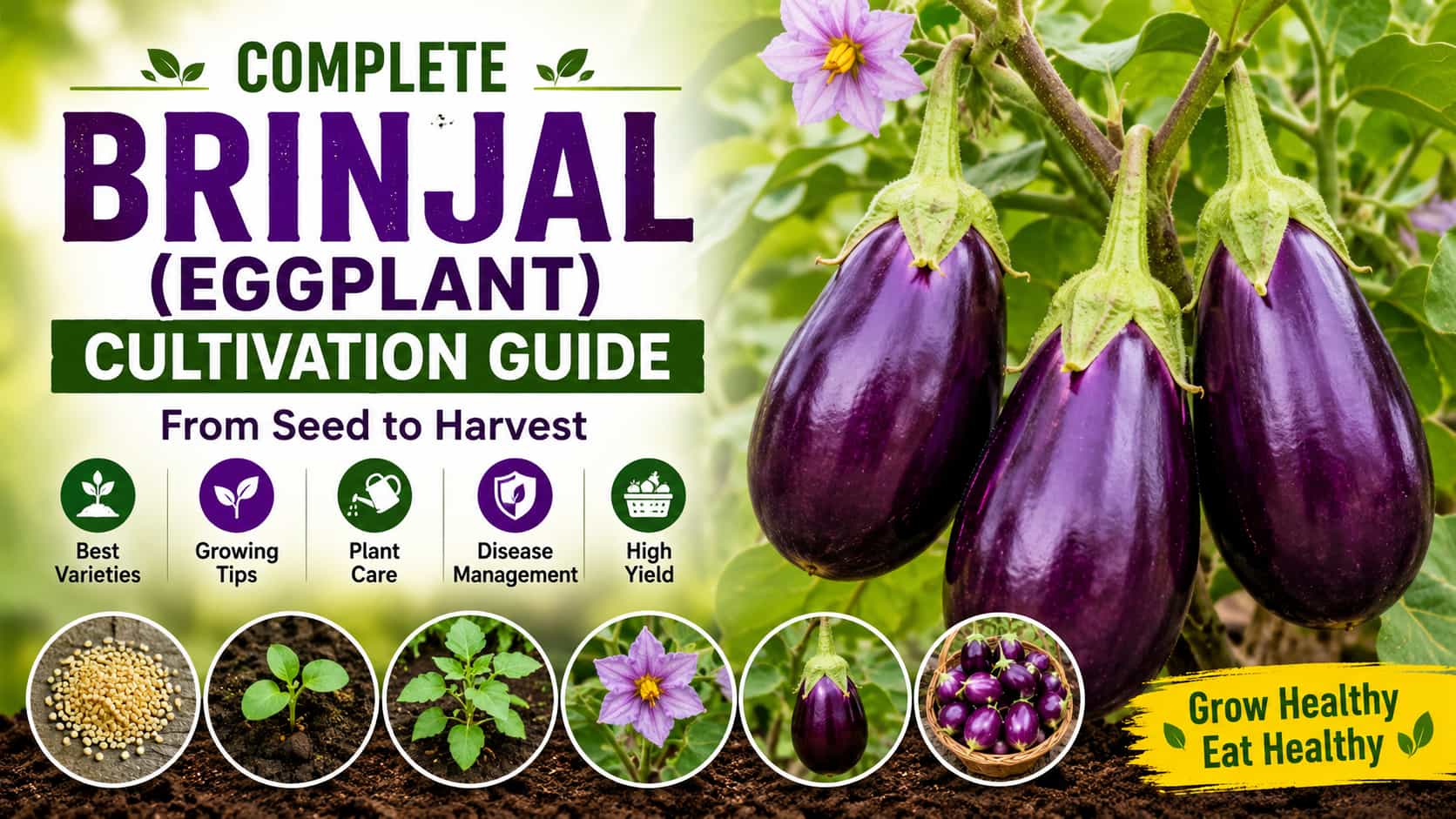
Brinjal plants usually begin flowering about 45–60 days after transplanting, depending on the variety and growing conditions. The first harvest is generally ready within 60–80 days, while some hybrid varieties may take slightly longer.
Harvest the fruits when they are fully developed, glossy, firm, and tender. Overripe fruits become dull, develop hard seeds, and lose their desirable taste and texture.
Use a sharp knife or pruning shears to harvest the fruits along with a short portion of the stalk. Avoid pulling the fruits by hand, as this may damage the branches and reduce future production.
Under proper management, harvesting can continue every 3–5 days, encouraging the plant to produce more flowers and fruits.
🌱 Brinjal Cultivation Guide – Series Links
Part 1 – Planting, Varieties & Nursery Management👉 Complete Brinjal (Eggplant) Cultivation Guide – Part 1Learn about the best brinjal varieties, common names across India, climate requirements, seed selection, nursery preparation, transplanting, spacing, and organic growing practices.
Part 2 – Irrigation, Plant Care & Disease Management
👉 Complete Brinjal (Eggplant) Cultivation Guide – Part 2Explore irrigation practices, plant care, flowering, organic nutrient management, micronutrients, bacterial wilt prevention, and major pest and disease management techniques.
Part 3 – Harvesting, Yield & Seed Saving
👉 Complete Brinjal (Eggplant) Cultivation Guide – Part 3Learn the right harvesting stage, expected yield, seed saving methods, storage tips, and practical recommendations for maximizing brinjal production.
Expected Yield
The productivity of brinjal depends on the variety, climate, nutrition, and overall crop management.
Average Yield
| Growing Method | Expected Yield |
|---|---|
| Home Garden Plant | 2–5 kg per plant |
| Hybrid Varieties | 4–8 kg per plant |
| Open Field Cultivation | 25–40 tonnes per hectare |
| Protected Cultivation | Higher depending on management |
Regular harvesting and proper nutrient management significantly increase overall yield.
Saving Brinjal Seeds
Gardeners can easily save seeds from healthy, disease-free plants.
- 🍆 Select fully mature fruits and allow them to ripen completely on the plant.
- ✂️ Cut the fruit open and separate the seeds.
- 💧 Wash the seeds thoroughly to remove pulp.
- ☀️ Dry them in the shade for several days.
- 📦 Store the seeds in an airtight container in a cool, dry place.
Properly stored seeds generally remain viable for one to two years.
Storage
Freshly harvested brinjals should be handled carefully to avoid bruising.
- Store fruits in a cool, well-ventilated place.
- Refrigeration helps extend freshness for 5–7 days.
- Avoid washing the fruits before storage, as excess moisture reduces shelf life.
For the best flavour and texture, consume freshly harvested brinjals whenever possible.
Tips for Better Yield
- 🌞 Grow plants in full sunlight.
- 🌱 Use healthy seedlings and disease-free seeds.
- 🌿 Apply organic manure at regular intervals.
- 💧 Maintain uniform soil moisture.
- 🐝 Encourage pollinators such as bees.
- 🍆 Harvest fruits regularly to stimulate continuous flowering.
- 🪴 Remove damaged leaves, diseased branches, and overripe fruits.
- 🦠 Monitor plants regularly for pests and diseases.
Frequently Asked Questions
Which is the best season to grow brinjal?
Brinjal can be grown throughout the year in many parts of India. However, May–June and September–October are generally considered the best planting seasons in Kerala.
Can brinjal be grown in grow bags?
Yes. Brinjal grows exceptionally well in grow bags and large containers. Choose a grow bag of at least 18–24 inches in diameter and use a well-drained potting mixture enriched with organic compost.
Why are my brinjal flowers dropping?
Flower drop may occur due to high temperatures, excessive rainfall, poor pollination, irregular watering, excessive nitrogen application, or micronutrient deficiencies such as boron.
What is the most serious disease in brinjal?
Bacterial Wilt is considered one of the most destructive diseases affecting brinjal cultivation. Maintaining proper drainage, practising crop rotation, and applying beneficial microorganisms such as Pseudomonas fluorescens and Trichoderma help reduce the risk of infection.
Which organic fertilizers are best for brinjal?
Well-decomposed farmyard manure, compost, vermicompost, neem cake, Jeevamrutham, Fish Amino Acid (FAA), and Egg Amino Acid (EAA) are excellent organic nutrient sources for healthy growth and higher yields.
How long does a brinjal plant produce fruits?
A healthy brinjal plant can produce fruits continuously for 6–10 months, and under favourable conditions with proper care, some plants may remain productive for up to two years.
Conclusion
Brinjal is one of the easiest and most productive vegetables to grow in home gardens and commercial farms. With proper seed selection, healthy nursery management, balanced organic nutrition, timely irrigation, effective disease prevention, and regular harvesting, gardeners can enjoy a continuous supply of fresh, nutritious fruits throughout the growing season.
Whether you cultivate brinjal in grow bags, containers, terrace gardens, raised beds, or open fields, following good agricultural practices will help maximize yield while minimizing pest and disease problems. By choosing suitable local or hybrid varieties and maintaining healthy soil, you can harvest quality brinjals for many months and even save seeds for the next growing season.