

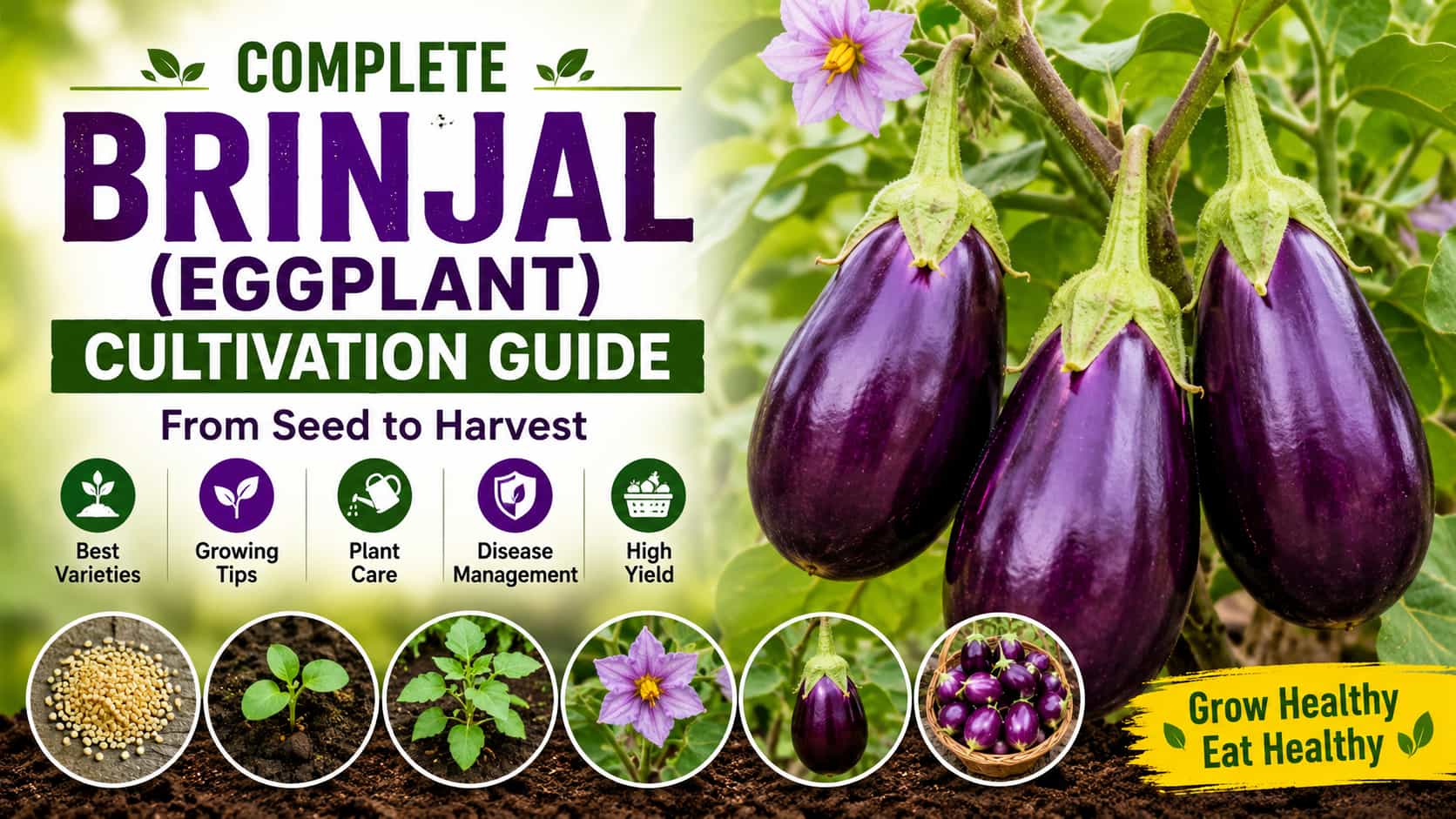
.Brinjal, also known as Eggplant or Aubergine, is one of the most popular and rewarding vegetables grown in home gardens and commercial farms across India. It is a staple ingredient in many regional cuisines and is used to prepare curries, sambar, stir-fries, stuffed dishes, roasted recipes, and several traditional delicacies. With proper care, a healthy brinjal plant can continue producing fruits for many months, and under favorable conditions, it may remain productive for up to two years.
Brinjal is suitable for cultivation in kitchen gardens, grow bags, containers, raised beds, and open fields. Thanks to its adaptability, it can be grown successfully in most parts of India throughout the year, although the best planting seasons vary depending on the local climate.
This comprehensive guide covers everything you need to know about Brinjal cultivation, including seed selection, nursery management, planting, irrigation, nutrient management, common Indian varieties, bacterial wilt prevention, micronutrient requirements, flowering, pest and disease control, and harvesting.
🌱 Brinjal Cultivation Guide – Series Links
Part 1 – Planting, Varieties & Nursery Management
👉 Complete Brinjal (Eggplant) Cultivation Guide – Part 1
Learn about the best brinjal varieties, common names across India, climate requirements, seed selection, nursery preparation, transplanting, spacing, and organic growing practices.
Part 2 – Irrigation, Plant Care & Disease Management
👉 Complete Brinjal (Eggplant) Cultivation Guide – Part 2
Explore irrigation practices, plant care, flowering, organic nutrient management, micronutrients, bacterial wilt prevention, and major pest and disease management techniques.
Part 3 – Harvesting, Yield & Seed Saving
👉 Complete Brinjal (Eggplant) Cultivation Guide – Part 3
Learn the right harvesting stage, expected yield, seed saving methods, storage tips, and practical recommendations for maximizing brinjal production.
Common Names of Brinjal in India
| Language | Name |
|---|---|
| English | Brinjal, Eggplant, Aubergine |
| Malayalam | Vazhuthana, Kathiri |
| Hindi | Baingan |
| Tamil | Kathirikai |
| Telugu | Vankaya |
| Kannada | Badanekayi |
| Marathi | Vangi |
| Gujarati | Ringan |
| Bengali | Begun |
| Punjabi | Baingan |
| Odia | Baigana |
Why Grow Brinjal?
Brinjal is an excellent vegetable crop for beginners as well as experienced gardeners. It adapts well to different growing conditions and requires only moderate maintenance once established.
Some of the major advantages include:
- High yield over a long harvesting period
- Suitable for terrace gardens and grow bags
- Easy to grow from seeds
- Available in numerous local and hybrid varieties
- Continuous harvesting for several months
- Excellent market demand throughout the year
Best Season for Brinjal Cultivation
In tropical regions like Kerala, brinjal can be grown almost throughout the year. However, the ideal sowing seasons are:
- May–June
- September–October
Choose a sunny location receiving at least 6–8 hours of direct sunlight daily. Good drainage is essential, as waterlogging increases the risk of soil-borne diseases such as bacterial wilt.
This serves as the introduction to the English article. The remaining sections will cover nursery raising, planting, nutrition, flowering, bacterial wilt, micronutrients, varieties, pest management, and harvesting in detail.






i like it very much, its so tasty.