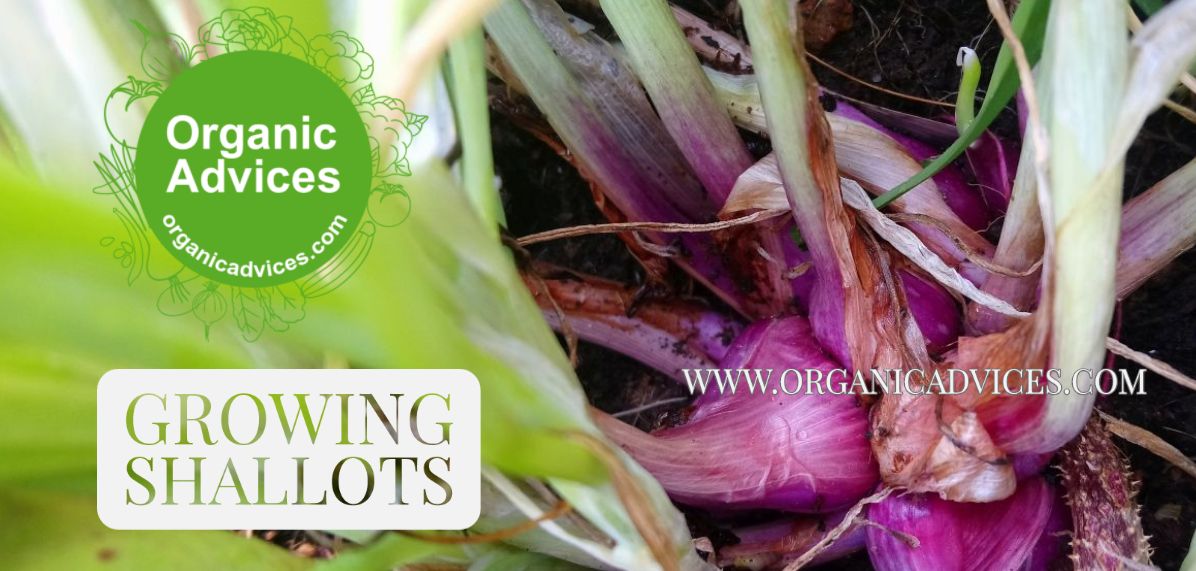

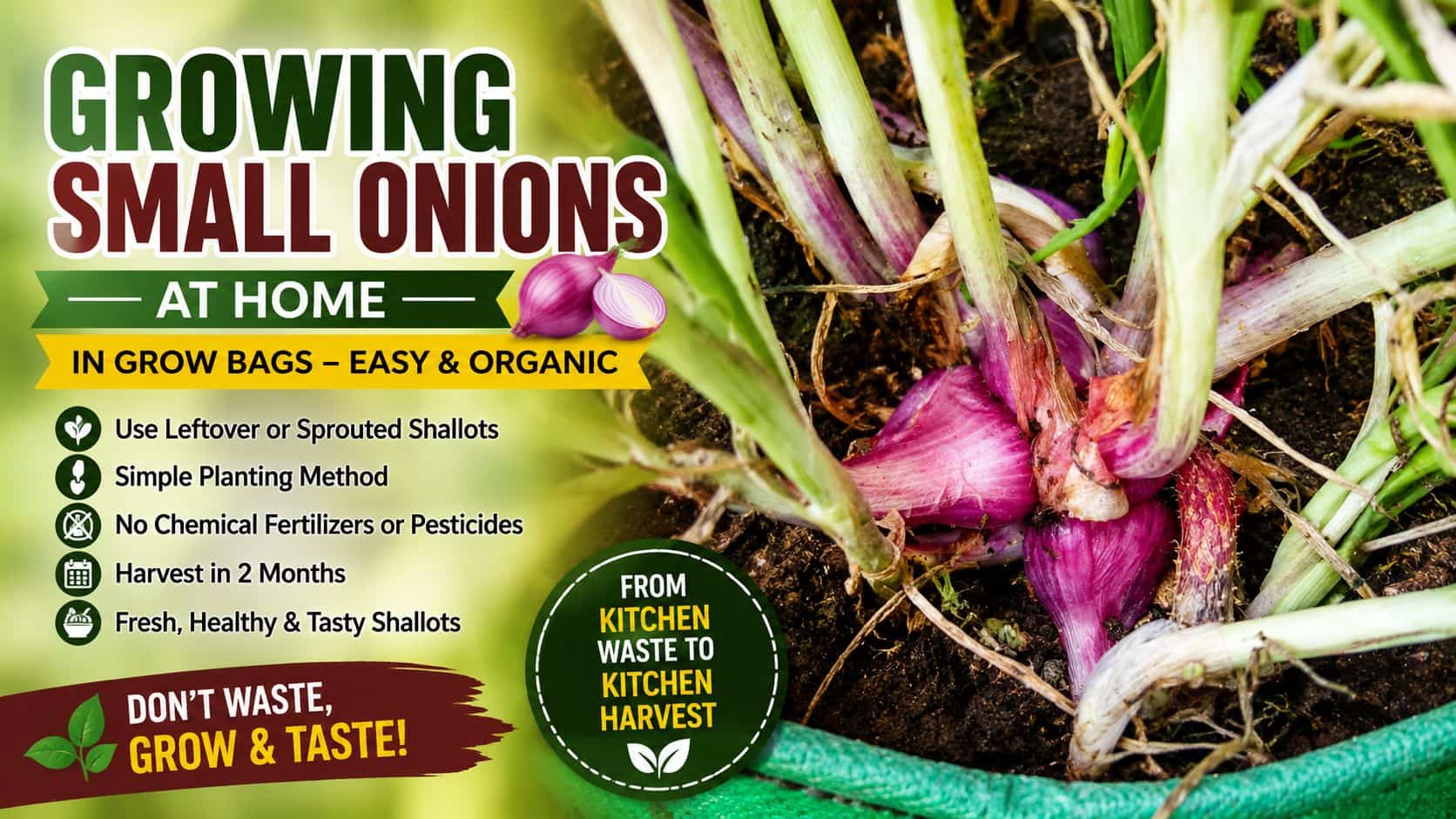
Growing small onions or shallots at home can be an interesting experiment for kitchen gardeners. Instead of throwing away small or sprouted shallots left in the kitchen, you can try planting suitable ones in a grow bag and observe how they develop.
This is based on my own grow bag experiment using leftover small onions. Some of the onions produced a useful harvest, while on a few earlier attempts some planted bulbs simply rotted.
It is important to note that this is a simple home gardening experiment rather than a guide to commercial shallot cultivation. Even when new bulbs do not develop successfully, the fresh green shoots may still be useful in the kitchen.
Growing Small Onions in Grow Bags – Quick Guide
| Details | Information |
|---|---|
| Crop | Small Onion / Shallot |
| Growing Method | Grow Bag |
| Planting Material Used | Leftover or sprouted small onions |
| Growing Medium | Soil + well-decomposed cow dung |
| Planting Depth | Light soil covering of around 1–2 cm |
| Watering | As required; avoid waterlogging |
| Additional Fertilizer Used | None in this experiment |
| Pesticide Used | None |
| Harvest in This Experiment | Around 2 months |
| Major Challenge | Heavy rain and excess moisture |
| Suitable for | Home and terrace gardening experiments |
Can We Grow Shallots from Leftover Small Onions?
Small onions purchased for cooking sometimes begin to sprout before they are used. There may also be very small bulbs left over in the kitchen.
Instead of immediately discarding suitable sprouted bulbs, they can be planted in a grow bag as a simple gardening experiment.
Avoid using bulbs that are completely rotten, badly damaged or showing extensive decay. Select those that still have healthy, firm portions and have started sprouting.
Even if they do not eventually produce a good bulb harvest, their green shoots can provide a useful edible crop.
Preparing the Grow Bag
The growing medium used in this experiment was very simple.
I mixed soil with well-decomposed cow dung and filled part of the grow bag with this mixture. There is no need to pack the soil tightly.
Good drainage is particularly important when growing onions in containers. Make sure the grow bag has sufficient drainage holes so that excess water can escape.
A loose growing medium that drains well is preferable to soil that remains continuously waterlogged.
How to Plant Small Onions in a Grow Bag
Place the selected small onions over the prepared growing medium with sufficient space between them.
Cover them with a thin layer of soil, approximately 1–2 centimetres, rather than burying the bulbs deeply.
After planting, water gently to provide sufficient moisture.
Under suitable conditions, new green shoots should begin appearing within a few days.
What to Do If Too Many Shallots Sprout
If many bulbs are planted close together in the same grow bag, the plants may become overcrowded as they develop.
Once growth is established, check the available space. Some plants can be carefully transferred to another grow bag or container if necessary.
Providing sufficient growing space can reduce competition and improve airflow between the plants.
Organic Fertilizer Used for This Experiment
I used well-decomposed cow dung mixed with soil while preparing the grow bag.
No additional fertilizer was applied during this particular experiment.
This does not mean that every shallot plant will grow successfully without additional nutrition. Soil fertility, container size, climate and growing conditions can vary considerably between gardens.
The important point is to avoid unnecessarily heavy fertilizer applications simply because the plants are growing in containers.
No Pesticides Were Required
I did not notice any significant pest problems during this experiment, so no pesticides were used.
Home gardeners should still inspect the plants regularly. If a pest or disease problem appears, identify the actual problem before deciding on a treatment.
Avoid unnecessary pesticide applications, especially when growing vegetables for household use.
Don’t Waste Onion Peels
The onion peels left after cooking can also be diverted from household waste.
Rather than adding large quantities directly to a grow bag, onion peels can be included with other biodegradable kitchen materials in a properly managed composting system.
Once decomposed, the resulting organic material can be used as part of a home gardening programme.
Heavy Rain Can Damage Shallots
One of the biggest challenges I noticed while experimenting with small onion cultivation was heavy rain.
Constantly wet soil can increase the possibility of bulbs rotting. This is especially relevant when shallots are cultivated in grow bags during periods of continuous rainfall.
Ensure that excess water drains freely from the container. During prolonged heavy rain, moving grow bags to a more protected location may also help where practical.
Harvesting Small Onions from the Grow Bag
In this particular experiment, I was able to harvest the small onions after approximately two months.
The results were not identical every time I tried the method. Some attempts produced a reasonable output, while in other cases some of the planted bulbs rotted before developing properly.
Therefore, the two-month period should be considered the result of this home experiment rather than a fixed harvest schedule.
Actual growth and harvesting time will depend on the planting material, weather, soil, moisture and overall plant development.
Is Growing Small Onions at Home Worth Trying?
If you already have small or sprouted shallots that would otherwise be discarded, planting them can be an enjoyable kitchen garden experiment.
You need only a suitable grow bag, a well-draining growing medium and healthy planting material to get started.
The objective does not have to be a large onion harvest. Watching discarded or sprouted bulbs develop into green plants is itself a useful way to learn about container gardening.
With favourable growing conditions, you may also be able to harvest fresh shallots or use their green shoots.
For home gardeners who enjoy experimenting with available materials, growing small onions or shallots in grow bags is a simple project worth trying.