

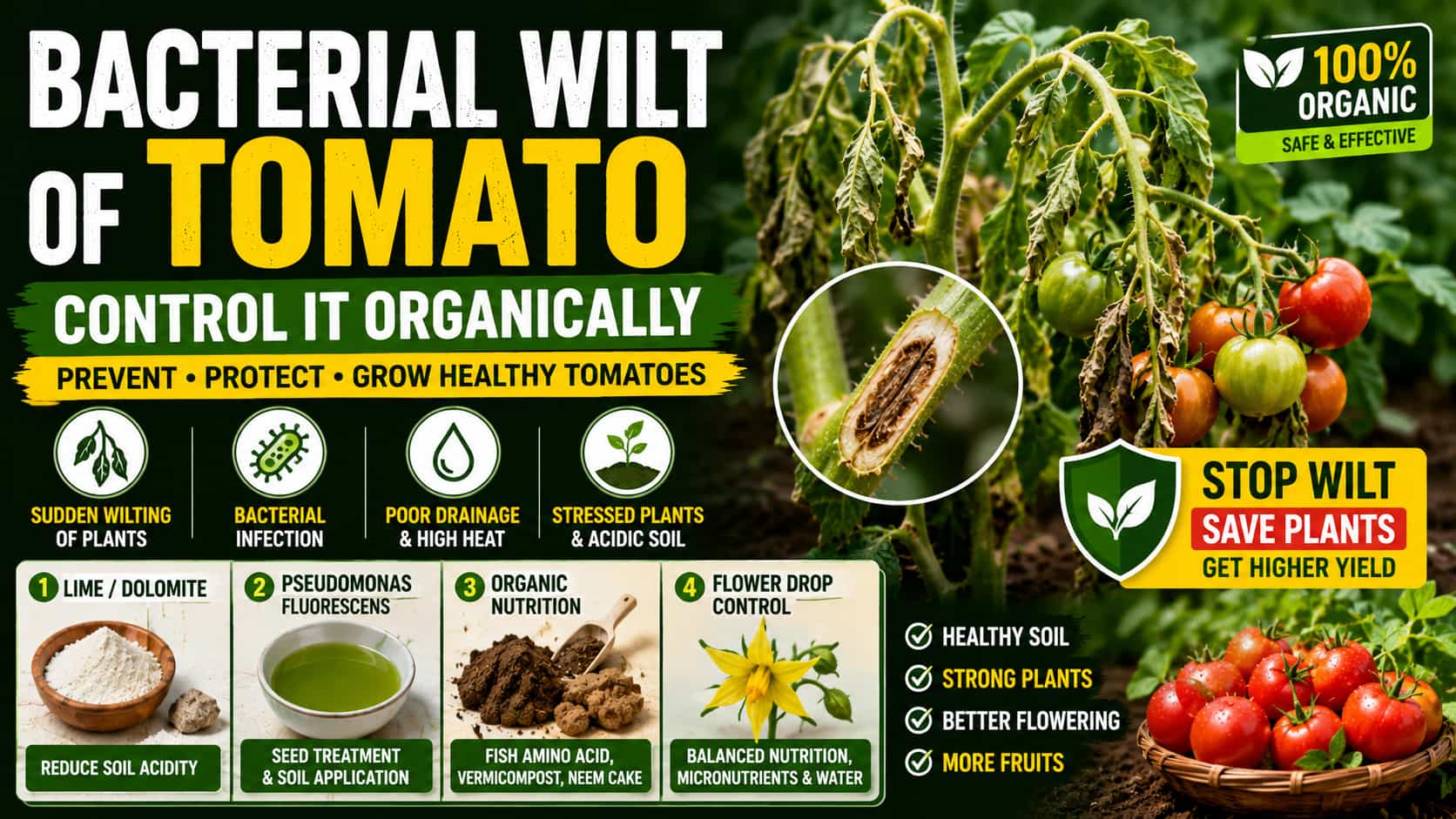
Bacterial wilt is one of the most destructive diseases affecting tomato plants. Healthy plants may suddenly wilt during the day, and eventually the entire plant collapses without recovering. Once the disease becomes severe, there is no reliable cure, making prevention the most effective approach.
This guide explains practical organic methods to reduce the risk of bacterial wilt, improve soil health, and grow healthier tomato plants in home gardens and terrace gardens.
🌿 What’s Covered in This Guide
| 🦠 Topic | Description |
|---|---|
| 🍅 Disease Overview | What is bacterial wilt? |
| 🌱 Causes | Why tomato plants wilt |
| 🛡️ Prevention | Organic management methods |
| 🦠 Pseudomonas | Biological disease management |
| 🌿 Soil Health | Lime and dolomite application |
| 🌼 Flower Drop | Causes and prevention |
| 🎥 Video Guide | Practical demonstration |
🍅 What is Bacterial Wilt?
Bacterial wilt is a soil-borne disease that blocks the water-conducting tissues inside tomato plants. The first symptom is usually sudden wilting of healthy-looking plants, especially during warm weather.
Common symptoms include:
- 🍂 Sudden wilting of leaves
- 🌿 Green leaves drooping without yellowing
- 💧 Plants fail to recover after watering
- 🍅 Gradual collapse of the entire plant
Because the bacteria survive in soil, prevention is far more effective than attempting to cure infected plants.
🌱 Common Causes
Several factors increase the risk of bacterial wilt.
These include:
- 🌧️ Poor soil drainage
- 🌡️ Warm and humid conditions
- 🦠 Presence of disease-causing bacteria in soil
- 🌱 Repeated tomato cultivation in the same location
- ⚠️ Stressed or weak plants
Maintaining healthy soil is one of the most effective ways to reduce disease pressure.
🌿 Improve Soil Health
Healthy soil supports healthier plants.
If your soil is highly acidic, correcting the soil pH may improve growing conditions.
Common Soil Amendments
- 🪨 Agricultural Lime (Quick Lime – use carefully according to local recommendations)
- 🌿 Dolomite Lime
These materials are commonly used to help manage soil acidity.
When preparing grow bags or garden beds:
- Mix the recommended quantity thoroughly with the soil.
- Allow the soil to stabilize before transplanting tomato seedlings.
Avoid applying excessive amounts, as soil pH should remain suitable for vegetable cultivation.
🦠 Pseudomonas fluorescens
Pseudomonas fluorescens is a beneficial microorganism widely used in agriculture as part of an integrated disease management program.
It can be used for:
- 🌱 Seed treatment
- 🪴 Soil application
- 💧 Root zone application
Always prepare and apply the product according to the manufacturer’s instructions.
Healthy soil microorganisms help create a better environment for root development and disease suppression.
🌿 Organic Plant Nutrition
Healthy plants are generally more resilient to environmental stress.
Organic fertilizers commonly used for tomatoes include:
- 🐟 Fish Amino Acid (FAA)
- 🌰 Groundnut Cake
- 🐄 Well-decomposed Cow Dung Compost
- 🌱 Vermicompost
- 🥚 Egg Amino Acid (EAA)
- 🍂 Compost
Balanced nutrition supports vigorous growth throughout the season.
🌼 Tomato Flower Drop
Flower drop is another common problem in tomato cultivation.
Tomato flowers may fall without producing fruits due to:
- 🌡️ High temperatures
- 💧 Irregular watering
- 🌿 Micronutrient deficiencies
- 🌬️ Environmental stress
- 🐝 Poor pollination
To reduce flower drop:
- Maintain consistent soil moisture.
- Provide balanced organic nutrition.
- Ensure adequate sunlight.
- Correct micronutrient deficiencies if they are confirmed.
- Avoid excessive nitrogen fertilization.
Healthy plants with balanced nutrition usually produce better fruit set.
🌱 Additional Prevention Tips
Good gardening practices help reduce disease problems.
- 🔄 Rotate crops whenever possible.
- 🌞 Choose a sunny location.
- 💧 Avoid waterlogging.
- ✂️ Remove severely infected plants promptly.
- 🌿 Use healthy seedlings.
- 🧼 Clean gardening tools regularly.
Prevention is always easier than managing an established disease.
🎥 Watch the Video
The accompanying video explains:
- Identifying bacterial wilt
- Soil preparation
- Lime and dolomite application
- Using Pseudomonas fluorescens
- Organic disease management
- Improving tomato plant health
Watching the complete guide provides practical techniques that are easier to understand than text alone.
🌿 Related Topics
- Tomato Cultivation
- Tomato Flower Drop
- Fish Amino Acid
- Organic Fertilizers
- Seed Germination
- Grow Bag Gardening
- Terrace Gardening
- Organic Disease Management
❓ Frequently Asked Questions
Can bacterial wilt be cured?
Once a tomato plant is severely infected, recovery is uncommon. Prevention through healthy soil management and good gardening practices is the best approach.
Is Pseudomonas fluorescens an organic option?
It is a beneficial microorganism commonly used in biological disease management programs and organic farming systems where permitted.
Can dolomite be used for tomato plants?
Dolomite is commonly used to reduce soil acidity and supply calcium and magnesium when a soil test indicates it is needed.
Why are my tomato flowers falling off?
Flower drop is commonly associated with temperature stress, inconsistent watering, micronutrient deficiencies, and poor pollination.
Does healthy soil help prevent bacterial wilt?
Healthy, well-drained soil with balanced nutrition can improve plant vigor and reduce the risk of many soil-related problems.


hi thanks for the easy solutions to control the wilt in tomato. i have searched for a lot regrading this issue and will try this methods.
how can v make ‘chakirichorvalam’ at hom?
Sir…how can we prevent leaf curl?
it is a good information