

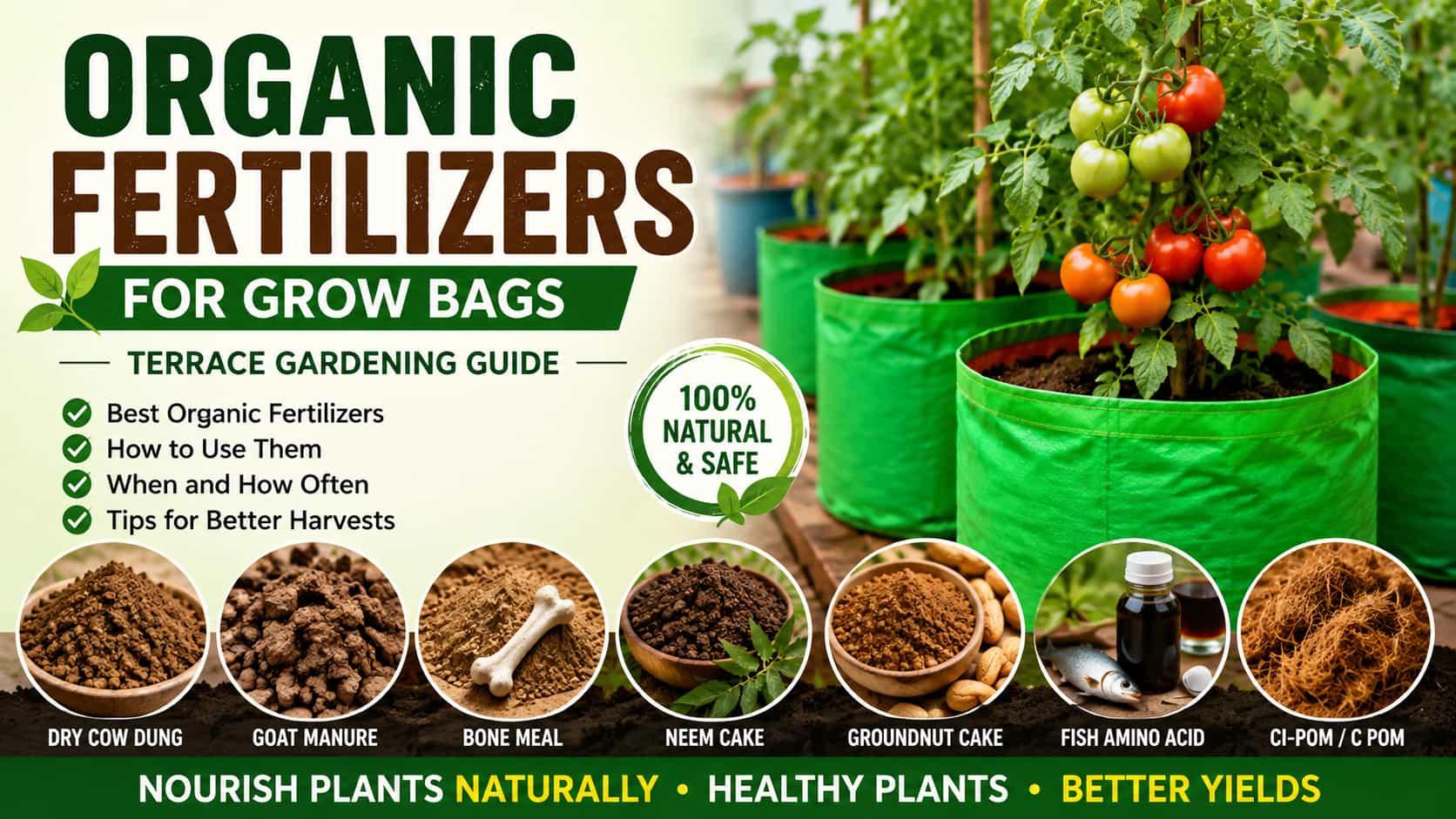
Growing vegetables in grow bags is one of the easiest ways to maintain a productive terrace garden. However, preparing a good potting mixture is only the beginning. Proper fertilizer application at different stages of plant growth is essential for healthy plants, flowering and better harvests.
We have already discussed grow bags, potting mixtures and cultivation methods using coco peat. Here, let us look at how to apply organic fertilizers in grow bags and some of the commonly used natural inputs for terrace vegetable gardening.
Where practical, organic inputs can be given preference in a home terrace garden. Fertilizers should always be applied according to the plant’s requirements rather than using excessive quantities.
Organic Fertilizers for Grow Bags
When preparing the potting mixture, adding a small quantity of dry leaves is useful. The leaves gradually decompose and add organic matter to the growing medium.
Dry cow dung, goat manure, bone meal and neem cake can also be incorporated into the potting mixture in suitable quantities. Once the plants become established, additional fertilizers can be provided according to their growth stage.
| Organic Fertilizer | Use in Grow Bags |
|---|---|
| Dry Cow Dung | Can be mixed with the growing medium or used later as an organic manure |
| Goat Manure | Adds organic matter and nutrients to the growing medium |
| Bone Meal | Commonly used as an organic source of phosphorus |
| Neem Cake | Provides nutrients and may also help in managing certain soil-related pests |
| Groundnut Cake | Nutrient-rich organic fertilizer suitable for many vegetable plants |
| Fish Amino Acid | Liquid organic input that can be diluted and applied to plants |
| Dry Leaves | Gradually decompose and increase organic matter |
| Ci-Pom / C Pom | Coir-based organic manure that also helps with moisture management |
Fertilizer Application During the Early Growth Stage
Heavy fertilizer application is generally unnecessary during the first one or two weeks after germination, particularly while seedlings are still becoming established.
During this period, concentrate on proper watering, drainage and sufficient sunlight so that the seedlings can develop healthy roots.
Pseudomonas-based agricultural products are also commonly used in plant health management. If using such a product, follow the application rate and instructions provided on its label rather than applying an arbitrary concentration.
Fish Amino Acid for Grow Bag Plants
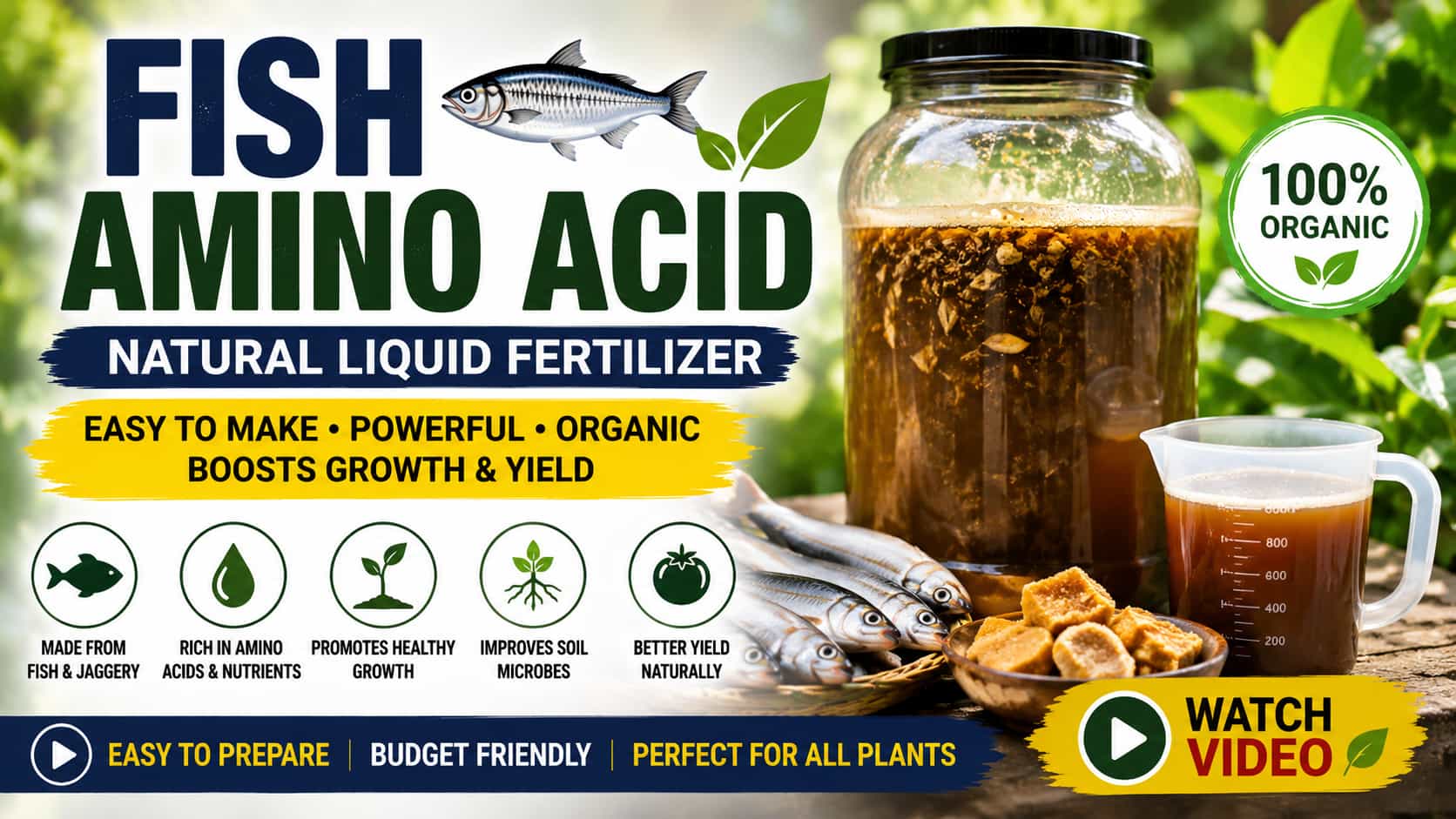
Fish Amino Acid is a popular liquid organic input used in home vegetable gardens.
It can be prepared using fish waste, while ready-to-use commercial products are also available. Depending on the formulation, diluted Fish Amino Acid can be applied around the root zone or used as a foliar application.
Because concentrations can vary considerably between homemade and commercial preparations, it should not be applied undiluted or at unnecessarily high concentrations. Follow an appropriate dilution ratio for the particular preparation being used.
Groundnut Cake as an Organic Fertilizer
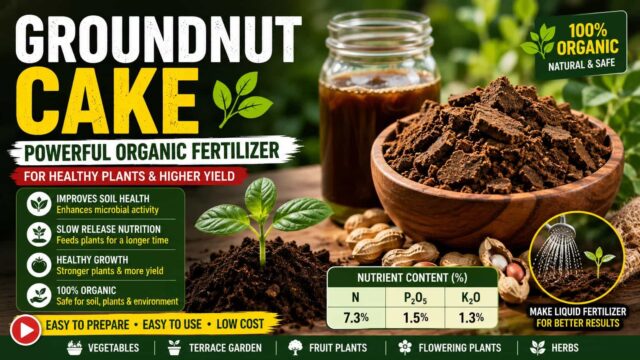
Groundnut cake is another useful organic fertilizer for grow bag cultivation. It contains plant nutrients and can be incorporated into a broader organic feeding programme for vegetables.
Instead of leaving large pieces of groundnut cake exposed on the soil surface, it can be powdered and lightly incorporated into the growing medium.
A small quantity of neem cake can also be mixed with groundnut cake before application.
The amount and frequency should be adjusted according to the vegetable variety, size of the plant, grow bag volume and other fertilizers already present in the potting mixture.
Overapplication should be avoided.
How to Make Liquid Fertilizer Using Groundnut Cake
Groundnut cake can also be used to prepare a liquid organic feed.
The cake can be soaked in water and allowed to break down for a short period. The resulting liquid should then be properly diluted before being applied around the plants.
Do not pour a highly concentrated fermented solution directly onto the roots, as excessive concentrations of organic inputs can damage plants.
Neem Cake for Grow Bags
Neem cake is particularly useful in organic terrace gardening because it can serve more than one purpose.
It contributes organic matter and nutrients to the growing medium and may also help reduce problems caused by certain soil pests.
Neem cake can be incorporated into the original potting mixture or applied later in small quantities.
A neem cake liquid preparation can also be made by soaking it in water, filtering the liquid and diluting it before application.
However, neem cake should not be considered a complete treatment for every pest problem. If a plant develops a serious infestation, identify the pest first and choose the appropriate control method.
Ci-Pom or C Pom for Terrace Gardening
Ci-Pom, also known as C Pom, is a coir-based organic manure that can be used in grow bags and other container gardening systems.
Coir-based organic materials can improve the physical condition of the growing medium while also helping it retain moisture.
Ci-Pom can be particularly useful when growing leafy vegetables such as spinach and other greens in containers. As with other organic inputs, the quantity should be adjusted according to the crop and growing medium.
Should Every Grow Bag Receive the Same Fertilizer?
No. One of the common mistakes in terrace gardening is applying exactly the same fertilizer quantity to every grow bag.
A tomato plant producing flowers and fruits has different nutrient requirements from a young chilli seedling or a grow bag filled with leafy vegetables.
The feeding schedule should therefore consider the type of vegetable, plant size, growth stage, potting mixture and grow bag size.
Observe the plants regularly. Leaf colour, new growth, flowering and fruit development can provide useful indications of how the plant is performing.
Watering and Drainage Are Equally Important
Even the best organic fertilizer programme cannot compensate for poor watering or drainage.
Grow bags should have sufficient drainage holes so that excess water can escape. At the same time, the growing medium should retain enough moisture to support healthy roots.
Check the growing medium before watering instead of following the same watering routine regardless of weather conditions.
During hot periods, grow bags may dry considerably faster than during cloudy or rainy weather.
Getting Better Harvests from Grow Bags
Successful grow bag gardening is not about adding more and more fertilizer. It is about maintaining the right balance between healthy soil, organic matter, nutrients, sunlight, moisture and drainage.
Start with a good growing medium enriched with suitable organic materials. Allow seedlings to establish properly, then provide additional nutrition gradually according to their growth.
Dry cow dung, goat manure, bone meal, neem cake, groundnut cake, Fish Amino Acid and Ci-Pom (C Pom) are among the organic inputs that can be incorporated into a grow bag gardening programme.
Regularly observing the plants and adjusting fertilizer and watering according to their actual condition can help maintain healthy vegetable plants and better harvests from a terrace garden.

ground nut cake means kadala pinnakku ?.
No kappalandy pinnaku.
How to make kadalappinnakku at home ?
its not easy friend, you can buy the same from shops.
Where can we get good kappalandipinnak and how is the average cost ?
I need some advises also
Which is organic fertiliser is good for thenghu ? ,vazha? Maavu? Kurumulaku? Plaavu.? Etc
I already used the ground cake as the organic fertilizer. But I used it by mixing with rice bran, cow dung and EM to liquid fertilizer. How do you think about it?
How and when to apply kadalai punnaku for veg plants in terrace garden. Please reply
Hi have a serious concern..Have got some cucumber(pottu vellari) seeds from kerala n it’s growing so well n so far many fruit were there but not a single one we could use due to some insect bite I see them spoil in the plant itself. I get to see so many ants in the plant is that what causing the issue pls guide me to grow them well. Thank you
How to relive a agathi tree (agathi cheera maram) from drying up in this season?