
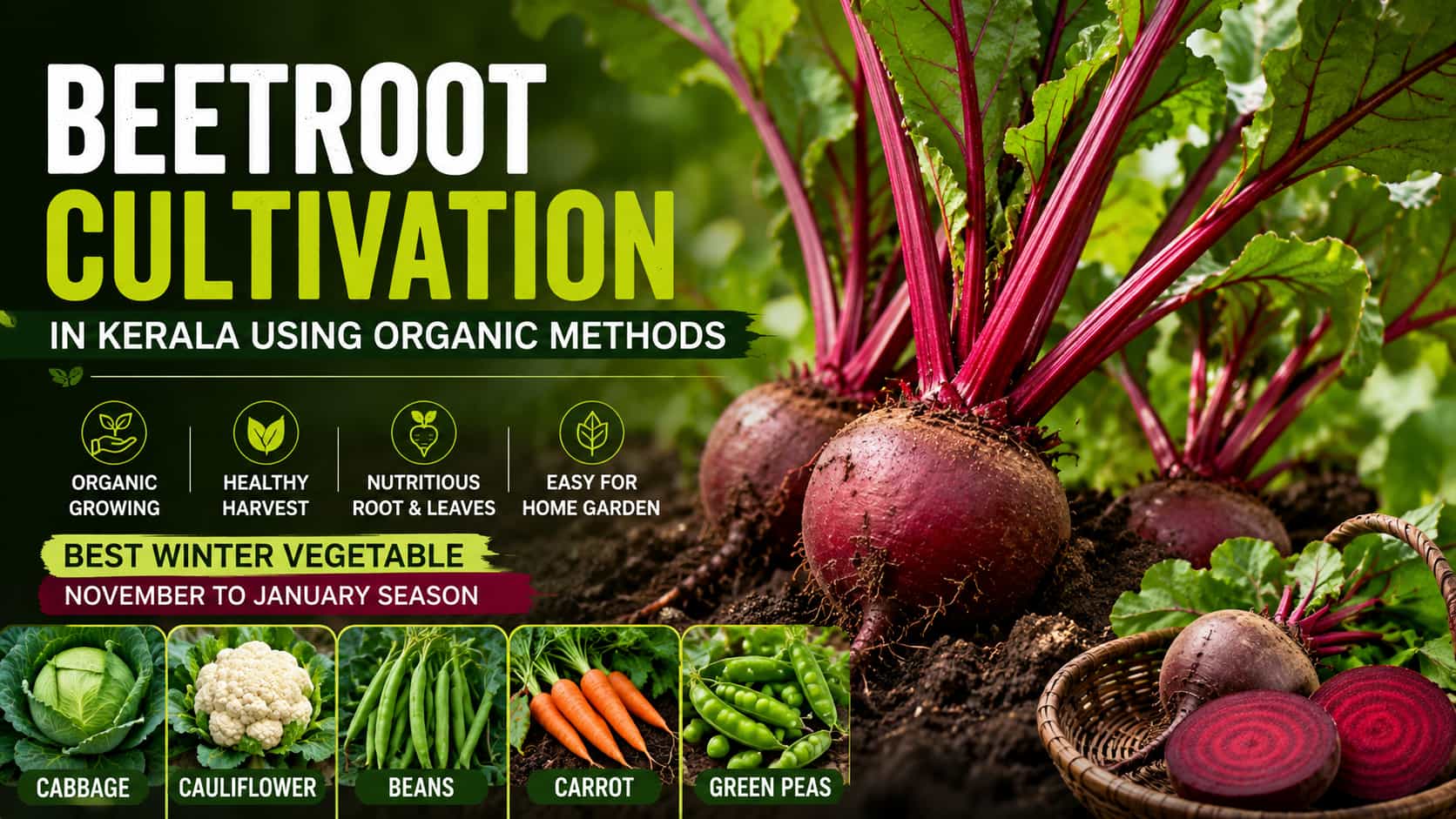
Growing beetroot organically is an excellent choice for home gardeners in Kerala. This nutritious root vegetable thrives during the cooler months and can be successfully cultivated in grow bags, containers, or directly in the ground. Both the beetroot bulb and its tender leaves are edible, making it a valuable addition to any kitchen garden.
Beetroot is commonly used in stir-fries, salads, pachadi, soups, and fresh juices. While home-grown beetroots may not always reach the size of commercially grown ones, they are fresher, tastier, and free from harmful chemical residues.
Note: Beetroot is traditionally considered a winter vegetable. Although improved varieties allow year-round cultivation, the ideal growing season in Kerala is from November to January, when cooler temperatures support better root development.

Beetroot Cultivation at a Glance
| Item | Details |
|---|---|
| Crop | Beetroot |
| Best Season | November – January |
| Growing Method | Direct sowing from seeds |
| Harvest Time | 90–100 days |
| Suitable Locations | Grow bags, terrace gardens, home gardens |
| Recommended Practice | Organic farming |
Other Winter Vegetables to Grow
Beetroot grows well alongside other seasonal vegetables such as cabbage, cauliflower, beans, green peas, carrots, lettuce, celery, broccoli, knol khol, Chinese cabbage, radish, spring onion, parsley, and coriander.
Planting Method
Beetroot is grown by sowing seeds directly in the soil. Soaking the seeds in clean water for 10–30 minutes before planting may help improve germination.
Choose loose, fertile, and well-drained soil for healthy root development. A potting mix enriched with compost or well-decomposed farmyard manure works well in grow bags and containers.
Maintain adequate spacing between plants so that each beetroot has enough room to develop properly.
Organic Fertilizer Application
Healthy beetroot plants require nutrient-rich soil but do not need heavy fertilizer applications.
Suitable organic fertilizers include:
- Well-rotted cow manure or compost
- Vermicompost
- Neem cake
- Fish Amino Acid (FAA)
- Fermented groundnut cake solution
- Other homemade organic liquid fertilizers
Water the plants regularly while avoiding waterlogging.
Pest and Disease Management
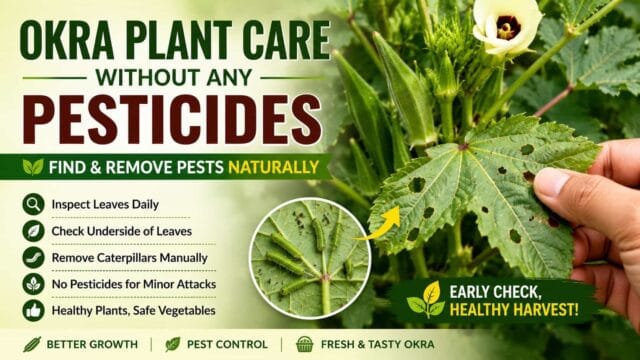
Beetroot is generally an easy crop to grow and often experiences fewer pest problems than many other vegetables.
Possible issues include:
- Cutworms
- Leaf-eating caterpillars
- Leaf spot disease
- Downy mildew
Most of these can be managed using organic pest control methods and maintaining good garden hygiene.
Harvesting
Beetroot is usually ready for harvest within three months of sowing, depending on the variety and growing conditions.
Harvest when the roots are firm and well-developed. The leaves can also be harvested and cooked as a nutritious leafy vegetable.
Why Grow Beetroot Organically?
Growing beetroot organically offers several benefits:
- Fresh, chemical-free vegetables
- Better flavor and nutritional value
- Suitable for terrace gardens and grow bags
- Easy to cultivate with minimal maintenance
- Both roots and leaves are edible
Conclusion
Beetroot is one of the best winter vegetables for organic cultivation in Kerala. It grows well in home gardens, terrace gardens, and containers with minimal care. By using organic fertilizers, maintaining healthy soil, and following simple cultivation practices, you can harvest nutritious, pesticide-free beetroot within three months. It also makes an excellent companion crop alongside cabbage, cauliflower, beans, and other cool-season vegetables.