

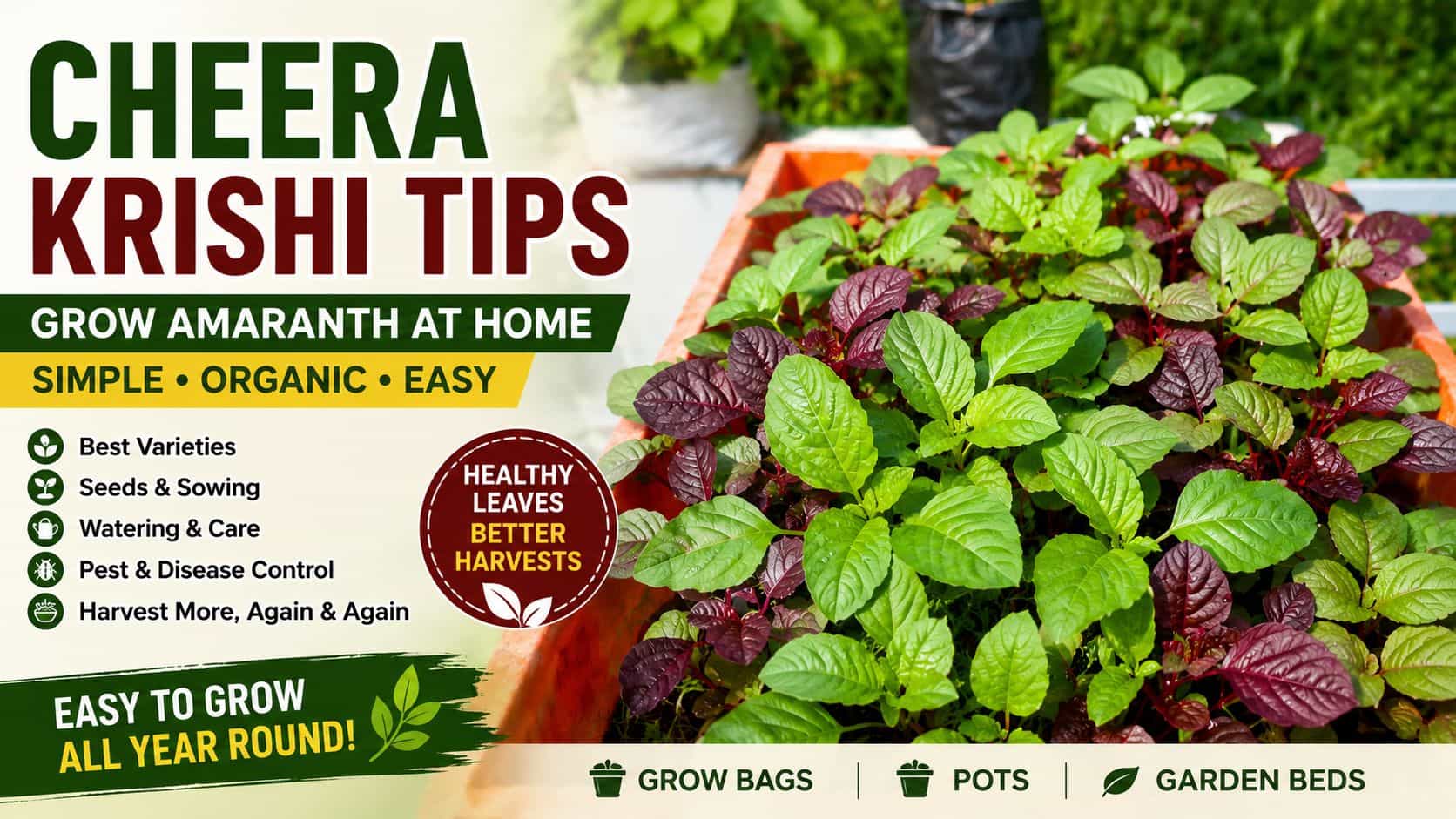
Cheera, or amaranth, is one of the easiest leafy vegetables to grow in a Kerala home garden. It can be cultivated directly in the ground or in grow bags and containers on a terrace, making it a good choice even when gardening space is limited.
Red Cheera and green Cheera are commonly grown varieties, while other types such as Pattu Cheera and Valli Cheera are also familiar to home gardeners. With good-quality seeds, a suitable growing medium, regular watering and simple organic care, fresh Cheera can be harvested repeatedly from a small kitchen garden.
Cheera Krishi – Amaranth Cultivation at a Glance
| Details | Information |
|---|---|
| Common Name | Cheera / Amaranth |
| Type | Leafy Vegetable |
| Common Varieties | Red Cheera, Green Cheera, Pattu Cheera, Valli Cheera |
| Where to Grow | Ground, Grow Bags, Pots and Containers |
| Suitable for Terrace Garden | Yes |
| Propagation | Seeds |
| Watering | Regular watering according to soil moisture and weather |
| Fertilizer | Compost and suitable organic manure |
| Common Problems | Leaf Spot and Leaf-Eating Caterpillars |
| Harvesting | Cut mature stems while retaining healthy leaves for regrowth |
| Suitable for Beginners | Yes |
Different Types of Cheera
There are several varieties of Cheera that can be cultivated in a home garden. Red Cheera is particularly popular in Kerala and is widely used for preparing traditional dishes.
Green Cheera is another excellent choice for a kitchen garden. Different varieties may respond differently to local weather, pests and diseases, so growing more than one suitable variety can be useful.
Pattu Cheera and Valli Cheera are among the other varieties familiar to Kerala gardeners.
Where Can We Grow Cheera?
One of the biggest advantages of Cheera cultivation is that it does not require a large garden.
If sufficient ground space is available, Cheera can be planted directly in prepared beds. Those with limited space can successfully cultivate it on a terrace or balcony using grow bags, pots and suitable containers.
Even recycled containers may be used when they are suitable for growing food crops and have sufficient drainage.
Whatever container is selected, make sure excess water can drain freely.
How to Select Cheera Seeds
Good-quality seeds are the starting point for healthy Cheera cultivation.
Amaranth seeds may be available through Krishi Bhavans, agricultural agencies, nurseries and recognised seed suppliers, depending on local availability and distribution programmes.
Red Amaranthus seeds are also commonly sold as Red Cheera or Laal Saag seeds.
When buying seeds, select a suitable variety for the local climate and check the seed packet for sowing instructions, germination information and expiry details.
How to Sow Cheera Seeds
Cheera seeds are very small, so they should not be buried too deeply.
Prepare a loose, well-draining growing medium enriched with organic matter. Sow the seeds relatively shallowly and maintain sufficient moisture during germination without keeping the growing medium waterlogged.
Once seedlings emerge and become established, overcrowded plants can be thinned or carefully transplanted where appropriate.
Adequate spacing improves airflow and gives individual plants more room to develop.
Organic Fertilizers for Cheera
Cheera does not require excessive fertilizer application when the growing medium already contains sufficient organic matter.
Well-decomposed compost or other suitable organic manure can be incorporated into the soil or potting mixture before sowing.
Additional organic nutrition can be provided according to plant growth. Avoid applying large quantities of concentrated manure or fertilizer directly around young seedlings.
For container cultivation, maintaining a healthy growing medium is often more useful than repeatedly adding excessive fertilizer.
Watering Cheera Plants
Regular watering is particularly important during hot and dry weather.
The aim is to keep the growing medium adequately moist without creating continuously waterlogged conditions. Containers and grow bags can lose moisture faster than garden soil, especially during hot days.
Check the soil before watering. If the upper layer is drying out, water the plants sufficiently.
During rainy periods, drainage becomes especially important because prolonged excess moisture can encourage plant health problems.
Cheera Cultivation During Different Seasons
Cheera can be grown during much of the year when suitable growing conditions are provided.
However, very heavy and continuous rainfall can make cultivation more difficult, particularly where drainage and disease management become problems.
During summer, monitor soil moisture carefully and water according to the condition of the growing medium.
Seasonal adjustments to watering, drainage and plant protection can help maintain healthy plants.
Common Problems in Cheera Cultivation
Cheera is relatively easy to maintain, but gardeners should still inspect the plants regularly.
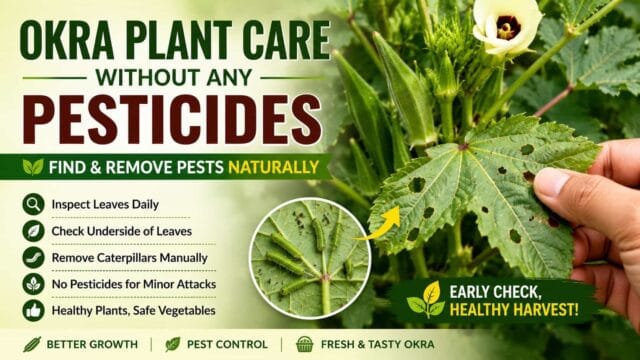
Leaf spot and leaf-eating caterpillars are among the problems that may occur. Regular observation makes it easier to detect damaged leaves, insects or disease symptoms before the problem spreads extensively.
Remove severely affected plant material where appropriate and maintain good spacing and airflow between plants.
Since Cheera is harvested for its leaves, be particularly careful when choosing any pest or disease control product. Follow the label directions and observe the specified waiting period before harvesting edible leaves.
Growing Red and Green Cheera Together
Growing more than one Cheera variety can make a home garden more diverse and can be useful when observing how different varieties perform under the same local conditions.
The older practice of planting red and green Cheera together is sometimes followed by home gardeners. However, mixed planting alone should not be treated as a guaranteed control for leaf spot disease.
Good drainage, suitable spacing, clean cultivation and early identification of affected plants remain important.
How to Harvest Cheera for Repeated Growth
Cheera does not always have to be pulled out with its roots during harvesting.
Once the plants have developed sufficiently, mature stems can be cut while leaving part of the healthy plant behind. New shoots can then develop from the remaining portion, allowing additional harvests.
When cutting, retain a few healthy leaves and nodes rather than cutting the plant extremely close to the base.
This method can encourage branching and provide multiple harvests from healthy plants.
Why Cheera Is Good for Beginner Gardeners
Cheera is a practical crop for someone starting a kitchen or terrace garden because it is relatively straightforward to grow and does not require a large amount of space.
It can be cultivated in grow bags, containers or ordinary garden beds, and harvesting can begin comparatively quickly under favourable growing conditions.
A small number of healthy plants can provide useful quantities of fresh leafy vegetables for household cooking.
Cooking with Fresh Cheera
Cheera can be used for much more than the familiar Cheera Thoran.
Fresh leaves can be incorporated into different Kerala dishes. Cheera can also be combined with ingredients such as jackfruit seeds and beans when preparing thoran and other home-style recipes.
It can also be included in suitable mixed vegetable preparations such as Avial according to individual preference.
Growing it at home makes it possible to harvest only the quantity required for cooking while allowing the remaining healthy plants to continue growing.
Simple Cheera Krishi Tips for Better Results
Start with good-quality seeds and a loose, well-draining growing medium rich in organic matter. Avoid overcrowding seedlings, provide sufficient sunlight and maintain regular watering without waterlogging.
Inspect the leaves frequently for caterpillars, spots or other abnormalities. Use organic manure according to the plant’s actual requirements rather than overfeeding.
Most importantly, harvest mature stems carefully instead of uprooting every healthy plant when repeated harvesting is possible.
With these simple cultivation practices, Cheera or amaranth can be one of the easiest leafy vegetables to grow organically in a Kerala kitchen garden, terrace garden or grow bag garden.




Cheera is not spinach. Spinach is different. Cheera’s English name is Amaranth.
thanks