
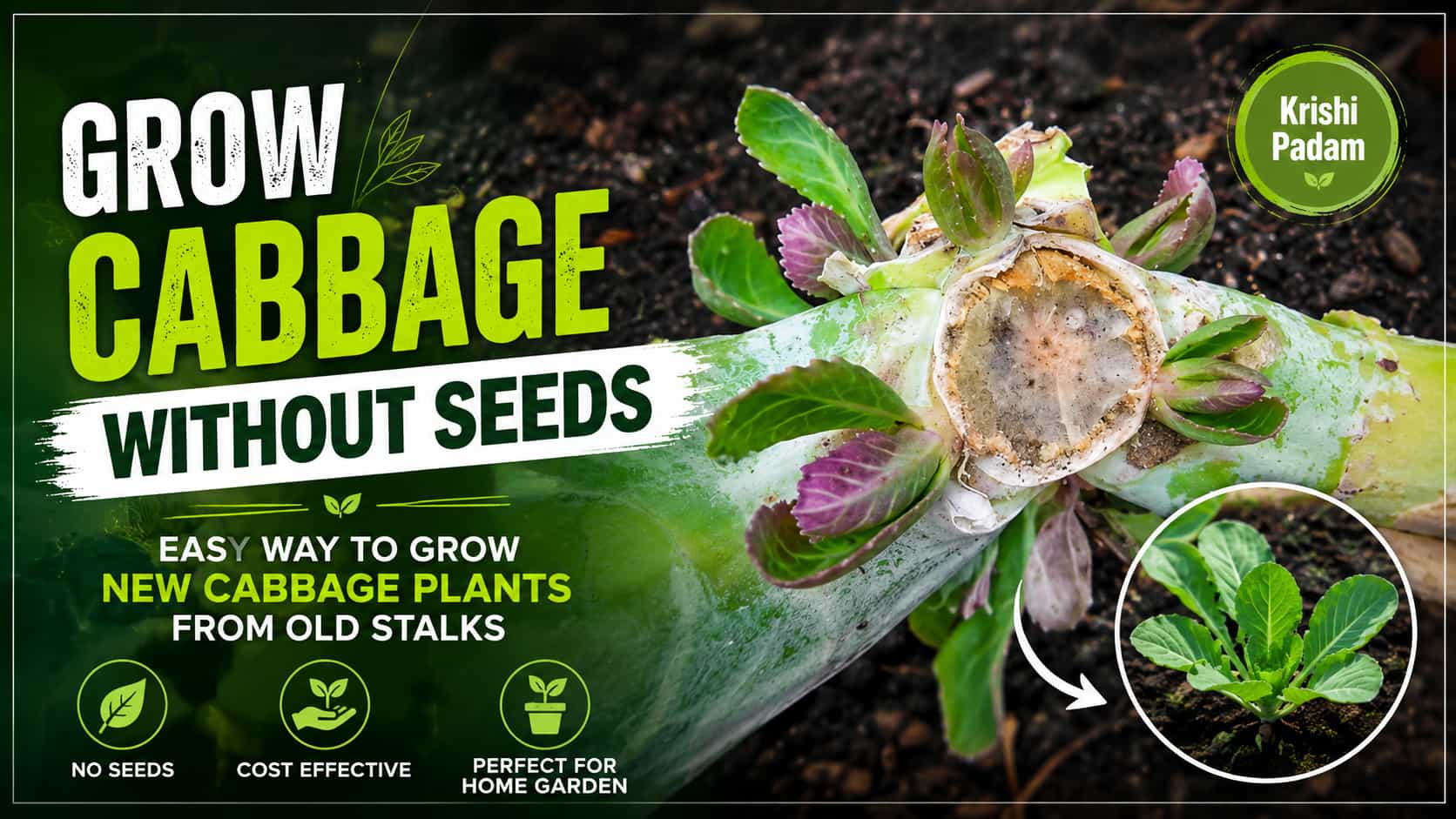
Growing cabbage does not always require sowing fresh seeds. If you have harvested a healthy cabbage plant, you can use the remaining stalk to grow new cabbage plants naturally. This simple propagation technique is ideal for home gardens, terrace gardens, and organic farming enthusiasts who want to reduce costs while making the most of each plant.
📋 Quick Overview
| 📝 Topic | 📌 Details |
|---|---|
| 🌱 Propagation Method | Grow new plants from harvested cabbage stalks |
| ⏳ Time for New Buds | About 2–3 weeks |
| 🍃 Best Time to Separate Buds | When they have 4–5 leaves |
| 🌤️ After Transplanting | Keep in partial shade for a few days |
| ❄️ Best Growing Season | Cool winter months |
🌱 Can You Grow Cabbage Without Seeds?
Yes! Similar to cauliflower, cabbage can also be propagated without using seeds.
Instead of removing the entire cabbage plant after harvest, leave the healthy stalk in the soil. Within a couple of weeks, small buds will begin to emerge around the stem. These buds can be separated and transplanted to grow into completely new cabbage plants.

This method is especially useful for home gardeners who wish to reuse healthy plants and reduce the need for purchasing seeds every season.
✂️ Harvest the Cabbage Correctly
The way you harvest your cabbage determines whether the stalk can produce new shoots.
- 🍃 Leave 2–3 healthy outer leaves attached to the plant.
- 🔪 Cut only the cabbage head.
- 🚫 Avoid removing all the leaves, as the stalk may rot without them.
- ⏳ Healthy stalks usually produce new buds within 2–3 weeks.
Proper harvesting significantly increases the chances of successful propagation.
🌿 Preparing New Cabbage Seedlings
Once the buds develop:
- 🌱 Wait until each bud has 4–5 healthy leaves.
- ✂️ Carefully separate the strongest buds.
- 🪴 Plant them in grow bags or directly in well-prepared soil.
- 🌤️ Keep the transplanted seedlings in partial shade for a few days.
- 💧 Maintain consistent soil moisture until the plants establish roots.
With proper care, these shoots will develop into healthy cabbage plants capable of producing new heads.
❄️ Growing Winter Vegetables in Kerala
Cabbage is a cool-season vegetable that performs best in lower temperatures.
In Kerala, winter vegetables such as:
- 🥬 Cabbage
- 🥦 Cauliflower
- 🥕 Carrot
- 🥬 Beetroot
are generally planted during November, when the weather becomes cooler and more favorable for their growth.
As temperatures rise after the harvesting season, plant growth may slow down.
💦 A Simple Tip for Warm Weather
If you are growing cabbage or cauliflower during warmer periods, many home gardeners use a simple technique to help reduce heat stress.
- ❄️ Spray cool water gently over the plants early in the morning.
- 🌡️ Some gardeners even use chilled water from a refrigerator in small quantities.
- ☀️ Avoid watering the leaves during the hottest part of the day.
Note: This is a practical gardening tip followed by many home growers. Results may vary depending on local weather conditions and growing practices.
🪴 Soil and Organic Nutrition
For healthy cabbage plants:
- 🛍️ Use quality grow bags or well-drained garden soil.
- 🌱 Prepare a nutrient-rich potting mix.
- 🍂 Apply organic compost or well-decomposed farmyard manure.
- 🌿 Supplement with natural organic fertilizers when required.
- 💧 Keep the soil evenly moist without waterlogging.
Healthy soil encourages stronger root development and better head formation.
🌾 Advantages of Growing Cabbage Without Seeds
- ✅ Saves money on seeds.
- 🌱 Produces multiple plants from a single harvested cabbage.
- ♻️ Makes efficient use of existing plants.
- 🏡 Ideal for home gardens and terrace gardening.
- 🌿 Well suited for organic gardening practices.
📊 Cabbage Propagation at a Glance
| 🌿 Stage | ⏱️ Approximate Time |
|---|---|
| Harvest cabbage head | Day 1 |
| Leave stalk with 2–3 leaves | Immediately after harvest |
| New buds appear | 2–3 weeks |
| Buds reach 4–5 leaves | Ready for transplanting |
| New plant establishment | Within a few weeks after planting |
🌱 Final Thoughts
Growing cabbage without seeds is an easy and economical propagation method that allows gardeners to produce new plants from harvested cabbage stalks. By leaving the healthy stem in the ground and transplanting the newly formed buds, you can extend your cabbage harvest while reducing gardening expenses. Although the harvested cabbage heads may not always reach the size of commercially grown vegetables, they can still provide an excellent yield for home consumption using simple organic gardening practices. 🌿