
Home composting is a simple way to manage biodegradable kitchen waste and convert it into useful organic manure. You do not need an expensive composting system to get started. A couple of old plastic buckets or suitable containers can be turned into a low-cost home composting unit with only a few modifications.
This method can help reduce the amount of household organic waste sent for disposal while producing compost that can later be used for plants in a home garden or kitchen garden.
Materials Needed for a Low Cost Composting Unit
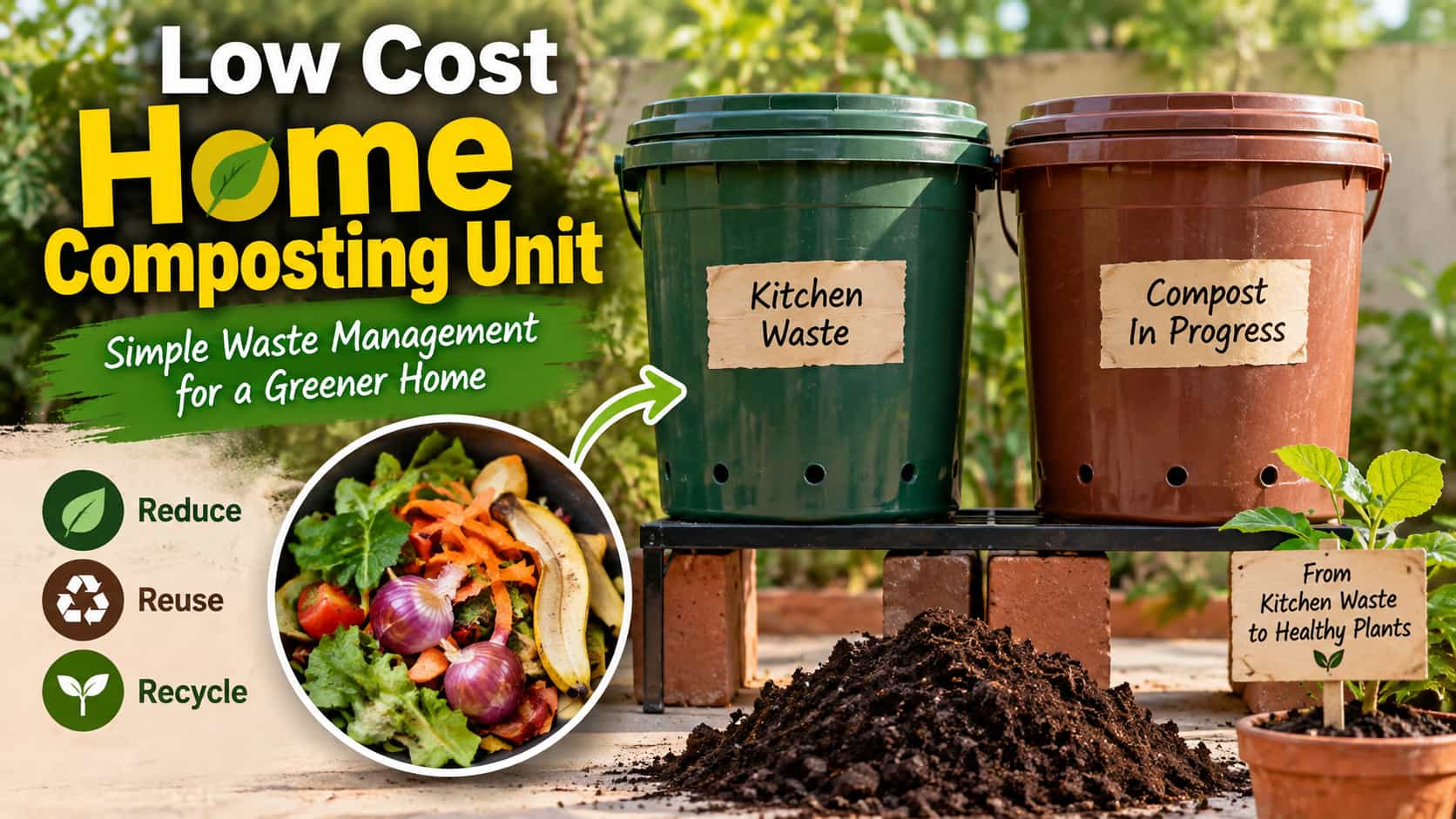
The basic setup requires two plastic buckets or containers. Old paint buckets can also be reused after they have been thoroughly cleaned.

Containers with a capacity of around 20 litres are suitable for a small household setup. Using two buckets allows one container to continue composting while fresh biodegradable waste is collected in the second.
Make approximately 4–6 small drainage holes at the bottom of each bucket. Keep the containers slightly raised from the ground using a simple stand or bricks so that excess liquid can drain away.
What Can Be Added to the Compost Bucket?
Kitchen waste such as vegetable and fruit scraps, peels and other biodegradable food waste can be collected for composting.
Avoid adding plastic, packaging materials and other non-biodegradable waste. It is also useful to separate unsuitable materials before placing kitchen waste into the composting container.
Materials that decompose slowly or may create problems in a small home composting system should be added cautiously or avoided.
How the Two-Bucket Composting System Works
Start collecting biodegradable kitchen waste in the first bucket. Add the waste gradually until the container is nearly full.
Keep the bucket covered with a suitable lid. A properly managed composting container should not produce a persistent strong foul smell. Excess moisture, unsuitable food waste or poor aeration can cause odour problems, so the contents should be monitored rather than simply sealed and forgotten.
Once the first bucket is full, stop adding fresh waste to it and begin using the second bucket.
This allows the contents of the first container to continue decomposing while the second one receives the household’s fresh kitchen waste.
Using Cow Dung or Curd
A small quantity of well-decomposed cow dung can be mixed with the organic waste as a microbial starter. Mature compost can also serve this purpose.
Some traditional home-composting methods use a little curd as a starter. However, adding large amounts of dairy products is unnecessary and may attract pests or create odour. Maintaining the correct balance of moisture, aeration and biodegradable material is more important.
If the compost becomes too wet, adding some dry leaves, shredded uncoated paper or similar dry biodegradable material can help restore balance.
Composting Time
After a bucket becomes full, allow the material sufficient time to decompose. The exact period can vary according to the type of waste, temperature, moisture and aeration.
Rather than relying only on a fixed number of days, check the material before using it. Finished compost should be dark, crumbly and earthy-smelling, with most of the original kitchen waste no longer recognisable.
If the material is still wet, foul-smelling or contains large amounts of undecomposed food, give it additional time to mature.
Using the Finished Compost
Once fully decomposed and matured, the compost can be used as an organic soil amendment for garden plants, vegetables and ornamental plants.
Mixing mature compost with soil can add organic matter and recycle nutrients that would otherwise have been discarded as household waste.
Home composting also provides a practical opportunity to separate biodegradable and non-biodegradable waste at the source.
Simple Home Waste Management Starts in the Kitchen
A low-cost composting system does not require sophisticated equipment. Two reusable buckets, drainage, suitable kitchen waste and basic compost management can provide an affordable starting point.
The most important steps are proper waste segregation, moisture control, adequate aeration and allowing the compost enough time to mature.
Turning kitchen scraps into useful compost is a small but practical way to reduce household waste while supporting a home garden.
Keep visiting Organic Advices for practical information about organic farming, home gardening, composting and sustainable cultivation.