
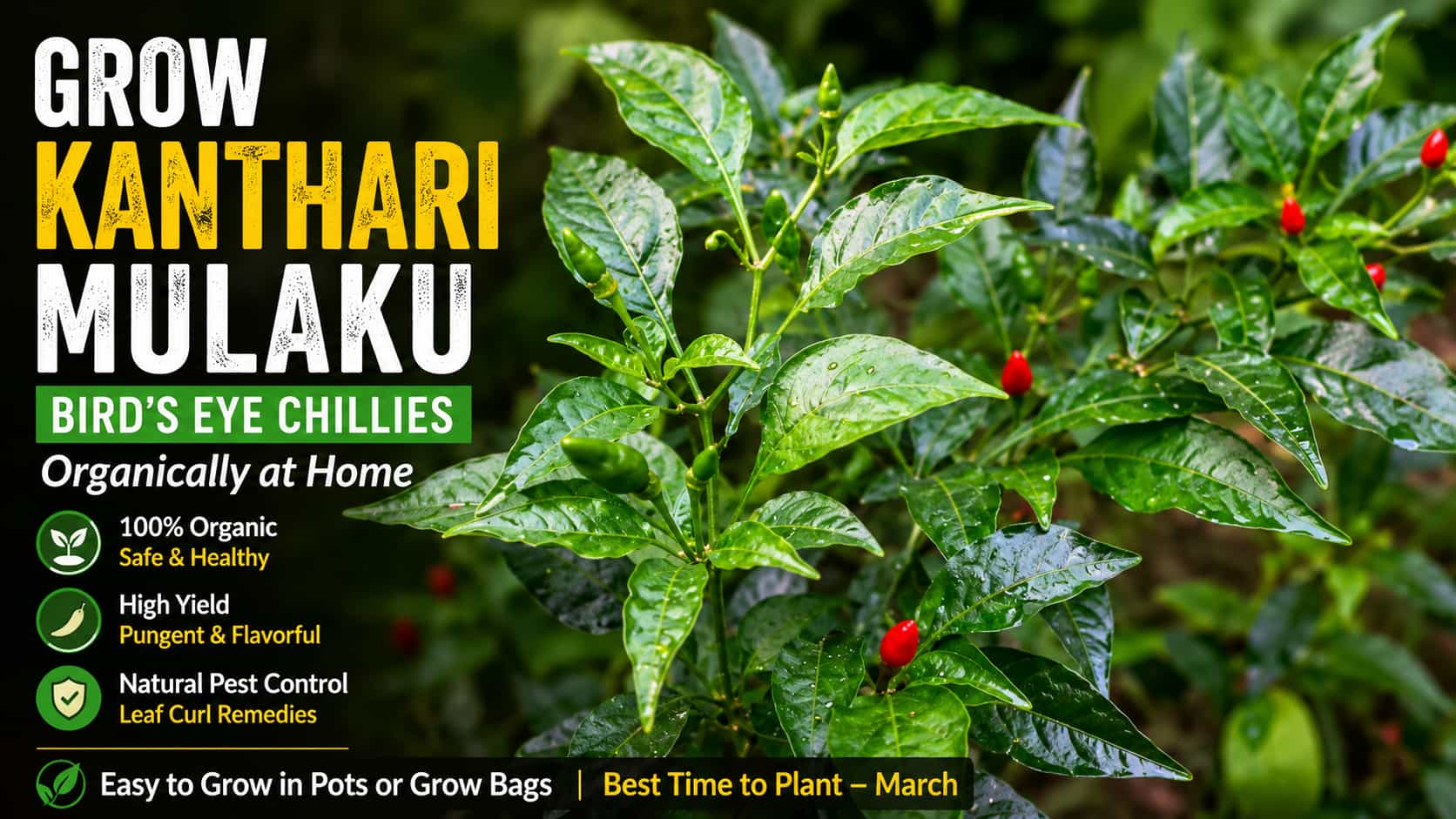
Bird’s Eye Chillies, popularly known as Kanthari Mulaku in Kerala, are one of the easiest and most rewarding chilli varieties to grow at home. These small but fiery chillies are widely used in Kerala cuisine and traditional home remedies. With proper organic care, Kanthari plants produce abundant fruits and can be grown successfully in grow bags, pots, or directly in the garden.
🩺 Note on Traditional Medicinal Uses:
Kanthari Mulaku has long been used in traditional food practices and home remedies. It is popularly believed to aid digestion, stimulate appetite, and support overall metabolism. Some people also consume it as part of a healthy diet for weight management and cholesterol control. However, these traditional uses are not a substitute for professional medical advice or treatment, and scientific evidence for some of these claims is still limited.
🌱 Bird’s Eye Chillies at a Glance
| 📌 Feature | Details |
|---|---|
| 🌶️ Common Name | Bird’s Eye Chilli (Kanthari Mulaku) |
| 🌿 Botanical Type | Chilli Pepper |
| 📅 Best Planting Season | March onwards |
| 🪴 Suitable Containers | Grow bags, plastic buckets, pots, garden beds |
| ☀️ Sunlight | 6–8 hours of direct sunlight |
| 💧 Watering | Moderate; avoid waterlogging |
| 🌱 Propagation | Seeds |
🌶️ Why Grow Kanthari Mulaku?
Kanthari Mulaku is a favourite among home gardeners because it requires relatively little maintenance while producing plenty of spicy chillies throughout the season.

The plants adapt well to containers, making them ideal for terrace gardens, balconies, kitchen gardens, and backyards. Their compact size also allows gardeners with limited space to cultivate them successfully.
🌱 Growing Bird’s Eye Chillies from Seeds
The easiest way to grow Kanthari is from seeds collected from healthy, fully ripened red chillies.
Choose mature red fruits from a disease-free mother plant. Remove the seeds, dry them in shade, and sow them in seed trays or small containers filled with a well-drained potting mix.
Once the seedlings develop a few healthy leaves and grow for about 2–3 weeks, transplant only the strongest plants into individual grow bags or pots.
Interestingly, Bird’s Eye Chillies also spread naturally. Birds often eat the ripe fruits and later disperse the seeds, which germinate during the rainy season. Many naturally grown Kanthari seedlings can be found around gardens and open spaces.
🪴 Best Containers and Potting Mix
Bird’s Eye Chillies grow well in:
- 🪴 Grow bags
- 🪣 Plastic buckets
- 🌿 Earthen pots
- 🌱 Raised beds
Use a loose, fertile, and well-draining organic potting mix enriched with compost or well-decomposed organic manure to encourage healthy root development.
🌿 Organic Plant Care
Healthy plants require regular watering without allowing the soil to remain soggy.
Adding organic compost at regular intervals improves flowering and fruit production. Avoid chemical fertilizers whenever possible and rely on natural organic inputs for long-term soil health.
🐛 Common Disease – Leaf Curl
Leaf curling is one of the most common problems affecting Kanthari plants.
Several traditional organic remedies can help manage the issue:
- 🌿 Diluted neem oil spray
- 🐄 Diluted cow urine solution
- 🍚 Cooled rice water (collected after boiling rice)
Always dilute neem oil and cow urine before spraying on plants to prevent leaf damage.
Regular observation and early treatment usually help prevent severe infestations.
🌾 Organic Pest Management
Instead of chemical pesticides, choose environmentally friendly organic solutions.
Organic pest control helps protect beneficial insects while producing healthier vegetables for home consumption.
Regular inspection of plants, removing infected leaves, and maintaining good air circulation also reduce disease problems naturally.
🌶️ Harvesting
Bird’s Eye Chillies can be harvested either green or fully ripe red, depending on your preference.
For seed collection, always choose healthy, mature red fruits from vigorous plants to ensure better germination for the next planting season.
❓ Frequently Asked Questions
🌱 When is the best time to plant Kanthari Mulaku?
March is generally considered one of the best months to begin planting, although cultivation is possible in other suitable seasons depending on local weather.
🌶️ Can Bird’s Eye Chillies be grown in pots?
Yes. Grow bags, buckets, and medium-sized pots are excellent choices for home cultivation.
💧 How can leaf curl be managed organically?
Traditional remedies include diluted neem oil, diluted cow urine, and cooled rice water, along with maintaining healthy growing conditions.
🌿 Can I avoid chemical pesticides?
Yes. Bird’s Eye Chillies can be successfully grown using organic fertilizers and natural pest management methods.
🌱 Conclusion
Growing Bird’s Eye Chillies (Kanthari Mulaku) organically is an excellent choice for home gardeners. With healthy seeds, proper sunlight, organic nutrition, and natural pest management, the plants can provide a steady harvest throughout the growing season. Whether planted in grow bags or garden beds, Kanthari remains one of the most productive and useful vegetables for every home kitchen garden.
